
Company summit recommendation
Why Mont-Tremblant Is the Right Choice for Our Company Summit
Mont-Tremblant gives the company the rare combination a summit needs: serious meeting infrastructure, easy walkable logistics, memorable team experiences, and a setting that helps people step out of day-to-day execution and into strategic thinking.
Recommendation
Choose Mont-Tremblant if the summit needs both alignment and momentum.
For a company summit, the destination has to do more than host sessions. It needs to support executive focus, make logistics simple, create shared memories, and give employees a reason to be fully present. Mont-Tremblant is strong on each of those dimensions, especially for teams that want a destination that feels special without becoming impractical.
1. It turns the summit into a true reset, not just a meeting block
The biggest argument for Mont-Tremblant is the environment. A summit is usually where a company asks people to think bigger: align on priorities, build trust across teams, solve cross-functional friction, and leave with renewed energy. A mountain destination naturally reinforces that shift.
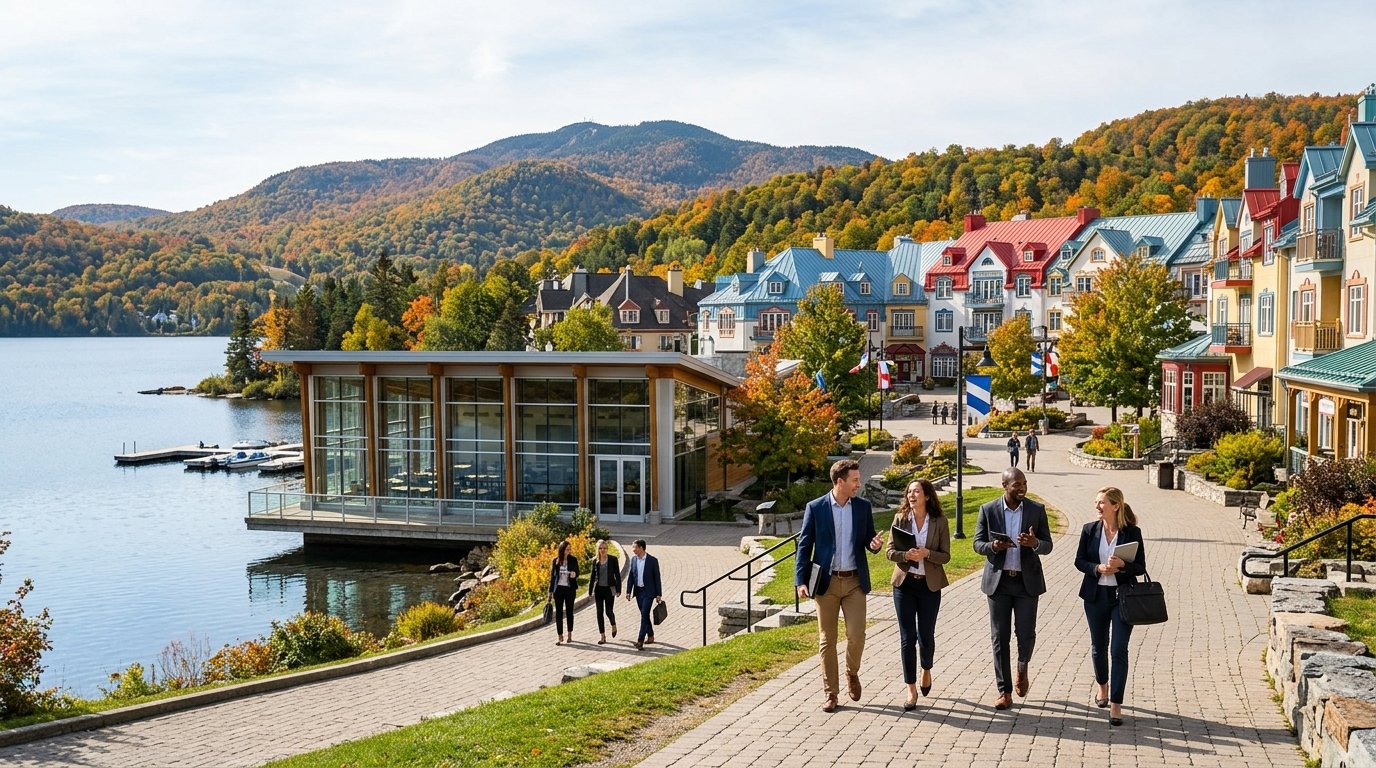
Compared with a downtown hotel ballroom, Mont-Tremblant creates a stronger psychological break from normal routines. People arrive somewhere distinct, walk through a compact village, see the mountains, and understand immediately that the summit is meant to matter. That context helps the company frame the event as a strategic reset rather than a long series of presentations.
2. The infrastructure is built for groups
Mont-Tremblant is not only scenic; it is an established group destination. The resort destination profile published through Cvent lists 52 meeting rooms, two conference centres, and enough lodging, dining, and activity options to support a multi-day corporate program. That matters because a summit needs operational reliability as much as atmosphere.
The company can structure the agenda around plenary sessions, breakouts, leadership workshops, team dinners, and optional activities without needing to invent the entire event from scratch. The destination already understands group movement, catering, AV needs, and the rhythm of conferences and retreats.
3. The village makes logistics easier
A strong summit should minimize friction. If people spend the week waiting for shuttles, searching for restaurants, or coordinating complicated transfers, the event loses energy. Mont-Tremblant’s pedestrian village is a practical advantage because lodging, restaurants, shops, meeting spaces, and activities can be planned within a compact footprint.
That walkability helps the company keep the agenda tight while still leaving room for informal connection. People can move from breakfast to a keynote, from a breakout to lunch, and from dinner to an evening activity without the event feeling overproduced or scattered.
4. It supports both serious work and team bonding
The best summits balance focus with shared experience. Mont-Tremblant makes that easier because it offers a strong work setting during the day and a natural menu of team-building options around it: hiking, skiing, golf, lake activities, spa time, ziplining, dining, and seasonal entertainment.
This flexibility is especially useful for a company with mixed preferences. Not every employee wants the same kind of offsite experience. A four-season resort lets planners design optional paths—active, social, wellness-focused, or low-key—without making the entire event revolve around one activity.
5. It feels premium without being performative
Summit destinations send a message. Mont-Tremblant feels polished and memorable, but it also feels grounded: mountain air, walkable streets, lakes, trails, and chalet-style hospitality. That balance is useful for a company that wants to invest in its people without creating the impression that the summit is more about spectacle than substance.
The destination can be positioned as an investment in clarity, connection, and execution. Employees get a beautiful setting; leaders get the conditions for better participation; the company gets a stronger chance that the summit produces commitments people remember after they return home.
6. It can work across seasons and agendas
Mont-Tremblant is not locked into a single event format. A winter summit can lean into snow, skiing, fireplaces, and focused indoor sessions. A summer or fall summit can use trails, golf, terraces, lakeside programming, and outdoor receptions. Shoulder seasons can help planners create a calmer, more cost-conscious experience while still benefiting from the destination’s infrastructure.
That seasonality gives the company options. The summit can be designed as a high-energy kickoff, a leadership alignment retreat, a product strategy gathering, a sales summit, or a full-company culture event.
Bottom line: Mont-Tremblant is the practical memorable choice
If the goal is simply to book meeting rooms, many cities can work. If the goal is to host a summit people talk about afterward—and to create the conditions for better alignment, deeper trust, and clearer priorities—Mont-Tremblant is a stronger choice.
The recommendation is to move forward with Mont-Tremblant as the preferred summit destination, then validate three planning details early: total room block availability, conference-space fit for plenary and breakout needs, and seasonal activity options that match the company’s culture.