
The Banana Hub • digestion edition
Bananas & Digestion: The Gut-Friendly Guide That Refuses to Split
Bananas are soft, portable, naturally sweet, and shaped like a tiny yellow telephone your gut can call when it wants fiber, potassium, and an easy snack. Are they magical? No. Are they useful? Absolutely. Let’s peel this responsibly.

Approximate fiber in one medium banana, according to Harvard’s Nutrition Source.
Calories in one medium ripe banana, with naturally occurring sugars and almost no fat.
Bananas are one of the classic bland foods used short-term during upset stomachs.
Less ripe bananas contain more resistant starch, which behaves like a fermentable fiber.
Why your belly may applaud
How bananas can support digestion
Bananas help digestion mainly because they provide fiber, including soluble fibers such as pectin, plus resistant starch in greener bananas. These compounds move through the digestive tract in different ways, helping add structure to stool, slowing digestion a bit, and giving beneficial gut microbes something to snack on. Imagine a tiny buffet, but everyone is bacteria and the dress code is “microscopic casual.”
- Fiber for regularity: A medium banana provides about 3 grams of fiber. That is not a whole day’s worth, but it is a helpful nudge.
- Gentle texture: Ripe bananas are soft and generally easy to chew and tolerate, which is why they often appear in bland-food plans.
- Resistant starch: Greener bananas contain more starch that resists digestion in the small intestine and can be fermented by gut bacteria later.
- Electrolyte support: Bananas contain potassium, an electrolyte that may be depleted during diarrhea or vomiting.
Factual but fabulous
Bananas are helpful, not a cure-all in a yellow tuxedo
Bananas can be part of a digestion-friendly diet, but they do not treat every gut issue, replace medical care, or single-handedly turn your microbiome into a luxury spa. If you have persistent diarrhea, vomiting, blood in stool, severe abdominal pain, unexplained weight loss, or symptoms that do not improve, contact a healthcare professional.
Choose your banana fighter
Ripeness matters: green, yellow, spotted, and “banana bread emergency”
Green banana
Higher in resistant starch. This may feed gut bacteria, but some people may find greener bananas harder to tolerate or more gas-producing.
Yellow banana
The everyday sweet spot: softer, sweeter, and easy to use in breakfast bowls, smoothies, or the ancient human ritual of eating over the sink.
Spotted banana
More ripe, sweeter, and very mashable. Excellent for oatmeal, pancakes, and pretending banana bread is a personality trait.

The science peel
The digestive mechanics, minus the lab coat drama
1. Fiber adds helpful bulk
Bananas contain dietary fiber. Fiber can help normalize stool consistency, though the exact effect depends on your overall diet, fluids, activity, and gut sensitivity. One banana will not do the work of a whole high-fiber diet, because even fruit has boundaries.
2. Pectin is a soluble fiber
Pectin forms gel-like structures and can slow digestion. In ripe bananas, pectin contributes to the soft texture and may help make stools more formed for some people.
3. Resistant starch feeds microbes
In greener bananas, resistant starch passes through the small intestine largely undigested, then can be fermented in the colon. That fermentation may support beneficial microbes, though it can also produce gas in sensitive people. Microbes: helpful, but not always polite.
4. Potassium matters during tummy trouble
Diarrhea and vomiting can deplete fluids and electrolytes. Bananas contain potassium, which is one reason they are often considered a gentle re-entry food after stomach upset. Hydration still comes first.
How to eat them
Digestive-friendly banana ideas
- For a sensitive stomach: Try small portions of ripe banana with water or an oral rehydration approach if you have been ill.
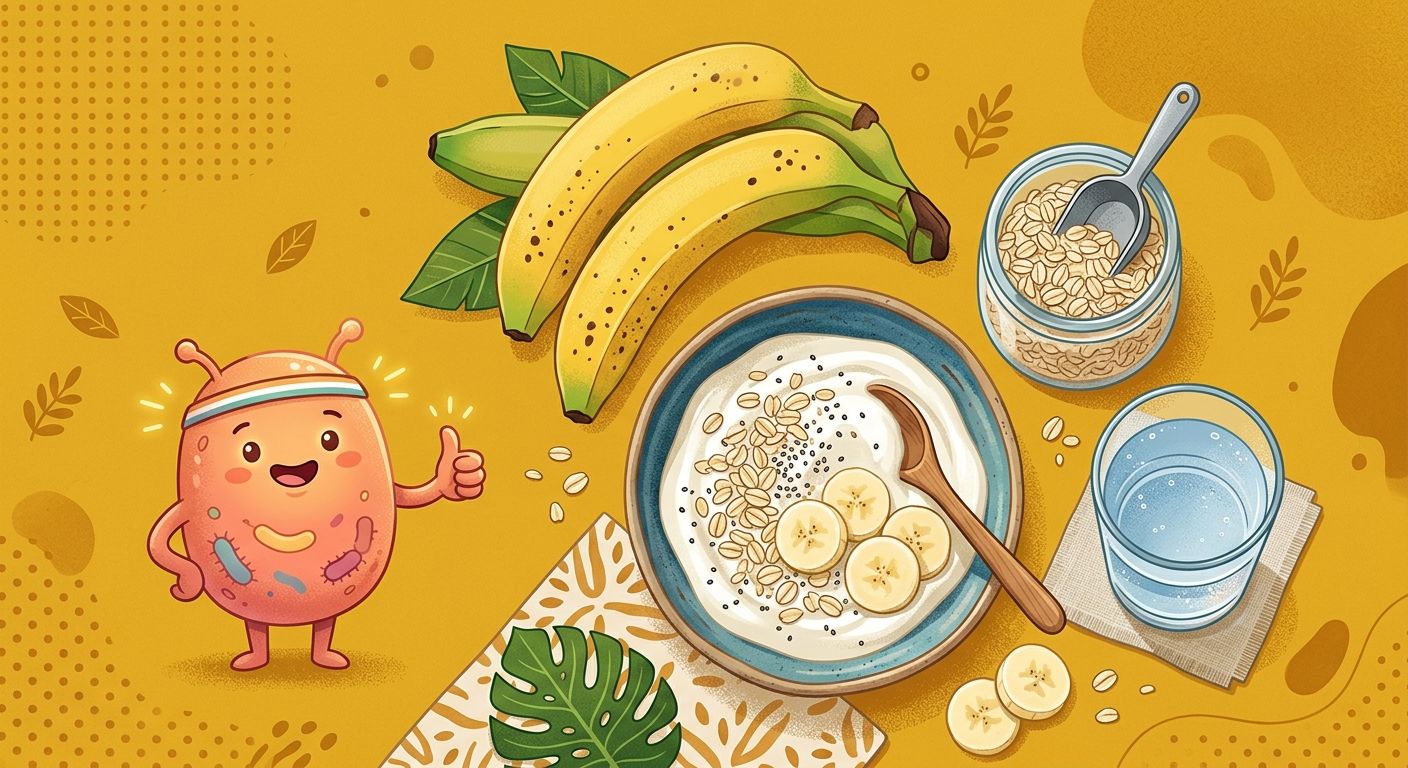
- For everyday regularity: Pair banana with oats, chia, whole grains, nuts, yogurt, or other fiber-rich foods.
- For gut microbes: Use slightly green banana slices in a smoothie if you tolerate resistant starch well.
- For constipation-prone days: Do not rely on banana alone. Increase fluids and total fiber gradually, and consider prunes, beans, vegetables, and whole grains.
Myth-busting, with peel appeal
Banana digestion myths: smashed
Myth: Bananas always cause constipation.
Reality: Not always. Effects vary. Ripe bananas provide fiber and are often well tolerated. Very green bananas may feel more binding for some people, while total diet and hydration matter a lot.
Myth: The BRAT diet is a long-term cure.
Reality: Cleveland Clinic notes BRAT foods can be gentle short-term, but the strict diet lacks key nutrients and should not be followed for long.
Myth: Bananas are “bad” because they contain sugar.
Reality: Bananas contain naturally occurring sugar packaged with water, fiber, vitamins, and minerals. Portion size and overall diet matter more than banana panic.
Banana hub map
Explore the banana universe
Questions people ask while holding a banana
FAQ
Are bananas good for digestion?
They can be. Bananas provide fiber, are usually gentle when ripe, and greener bananas contain resistant starch that can feed gut bacteria. They are best viewed as one useful food within an overall balanced diet.
Are bananas good when you have diarrhea?
Bananas are one of the classic bland foods people may tolerate during short-term stomach upset, and they provide potassium. However, fluids are crucial, and a strict BRAT diet should not be used for more than a short period because it lacks many nutrients.
Do bananas cause gas?
They can for some people, especially greener bananas because resistant starch is fermented by gut bacteria. If bananas make you bloated, try smaller portions or riper bananas.
How many bananas should I eat per day?
There is no universal magic number. One banana a day can fit many diets, but variety matters. Rotate fruits, vegetables, legumes, grains, and proteins so your gut microbiome does not think the menu is written by a minion.
Receipts, not rumors
Sources
- Harvard T.H. Chan School of Public Health — Bananas
- USDA SNAP-Ed — Bananas nutrition, selection, and storage
- Cleveland Clinic — BRAT diet guidance
This article is educational and not medical advice. If your digestive symptoms are severe, persistent, or unusual, please consult a qualified healthcare professional.