
China’s Superpower Moment: How the Iran War Is Accelerating America’s Relative Decline
The Iran war has not automatically made China the world’s uncontested superpower. But it has accelerated a deeper shift: America is spending military, diplomatic and economic capital while Beijing is positioning itself as the steadier pole in a fractured global order.
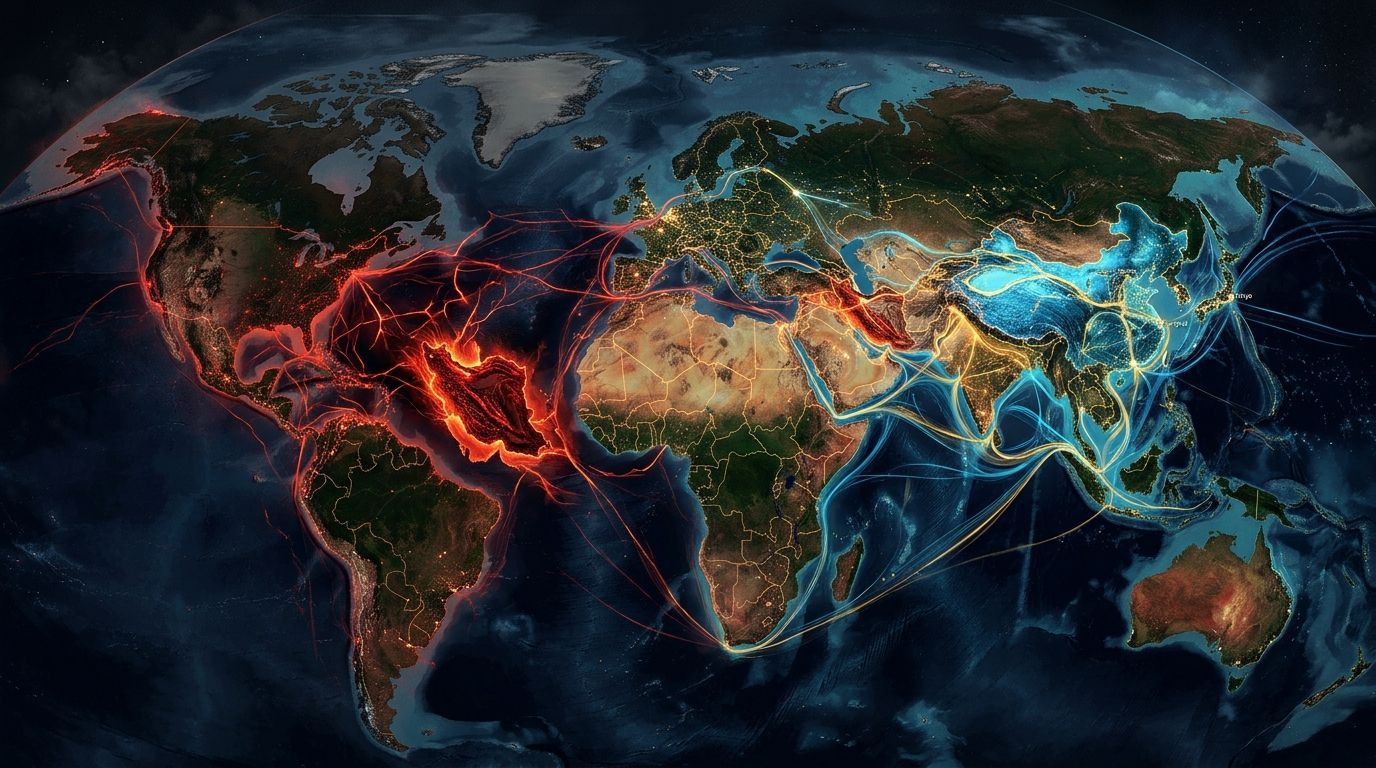
Key takeaways
- America’s problem is relative decline, not collapse. The United States remains militarily and financially powerful, but the Iran war is exposing limits in munitions, alliance management and global legitimacy.
- China gains from the optics of restraint. Beijing can present itself as a pro-stability power while Washington is identified with escalation and energy disruption.
- The conflict also hurts China. Recent analysis shows China faces energy shocks, weaker export demand and risks to Middle East investments.
- The likely outcome is a more multipolar world. China may be the biggest beneficiary, but the transition is not a simple handover from Washington to Beijing.
During April and May 2026, a new argument moved from the edges of commentary into mainstream geopolitical debate: the war with Iran may be the clearest sign yet that the United States is losing the uncontested leadership position it held after the Cold War. At the same time, China is trying to turn that American overextension into a claim for global leadership, a dynamic reflected in Reuters reporting on how the Iran war loomed over U.S.-China diplomacy and shifted alliance calculations.
The argument is tempting because the symbolism is powerful. Washington is tied down in another Middle Eastern war. Energy markets are under pressure. Allies are uneasy. The U.S. defense-industrial base is being questioned. Meanwhile, Beijing is speaking the language of de-escalation, economic continuity and national resilience.
But the real story is more complex than “China replaces America overnight.” The Iran war is not proof that the United States has ceased to be a superpower. It is evidence that U.S. dominance is becoming more expensive, more contested and less trusted. That is precisely the space China wants to occupy.
1. The Iran war is damaging America’s image as rule-maker
One of the biggest sources of U.S. power has never been military force alone. It has been the perception that America provides rules, stability, open sea lanes, reserve-currency confidence and security guarantees. The Iran war is weakening that image.
Chinese state media and analysts have seized on this point. The South China Morning Post reported in April 2026 that People’s Daily accused Washington of moving from “international rule-builder” to “predatory hegemon,” arguing that the United States is now seen by Beijing as a “rule-breaker” and “cooperation saboteur.” Whether one accepts that language or sees it as propaganda, it reveals Beijing’s strategic message: America creates disorder; China offers stability.
That message matters because many countries outside the West do not judge power only by aircraft carriers or GDP. They judge it by predictability. If the United States appears to trigger oil shocks, disrupt trade routes and pressure partners into taking sides, China’s alternative pitch becomes more attractive — especially to countries in the Global South that want investment without being pulled into U.S.-led wars.
2. U.S. military power is still enormous, but the war exposes limits
The United States remains the strongest military actor in the world. Yet recent CSIS analysis has highlighted a central vulnerability: fighting a major war consumes advanced weapons faster than they can be replaced.
In an April 2026 report on munitions after the Iran ceasefire, CSIS concluded that the United States still had enough missiles to continue the Iran war under plausible scenarios. The bigger danger, the report said, is “future wars — particularly against a peer competitor like China.” It noted that several key munitions may have been heavily depleted and that rebuilding stockpiles could take one to four years.
A separate CSIS brief published in May 2026 argued that the U.S. military would struggle in a prolonged conflict with China because of shortages in long-range munitions, air defense interceptors, unmanned systems and vulnerable Indo-Pacific infrastructure. That does not mean China is militarily superior today. It means the Iran war adds risk to America’s ability to deter or fight simultaneously in multiple theaters.
This is where relative decline becomes visible. A declining hegemon does not suddenly become weak. It becomes overstretched. It can still win battles while losing strategic flexibility.
3. China’s opportunity: look steady while America looks exhausted
China’s strongest advantage in this moment is not that it can replace the U.S. Navy tomorrow. It is that Beijing can frame itself as the patient power. When Washington is forced to ask for diplomatic help, calm energy markets or manage alliance anxiety, China looks less like a challenger and more like an indispensable broker.
Reuters coverage in May 2026 described U.S. President Donald Trump heading to China in need of wins after the Iran war, while another Reuters report said the war loomed over U.S.-China diplomacy and shifted alliance calculations. Even without relying on Chinese narratives, the optics are clear: Washington is under pressure; Beijing has leverage.
For China, this is a strategic opening in three ways:
- Diplomatic leverage: Beijing can present itself as a voice for ceasefire, negotiation and sovereignty.
- Economic leverage: countries hit by energy shocks may deepen trade and infrastructure ties with China as they seek alternatives.
- Narrative leverage: China can argue that the U.S.-led order produces wars, sanctions and instability, while Chinese-led development promises continuity.
4. The irony: the Iran war also hurts China
The case for China as the “new global superpower” becomes weaker if it ignores the costs Beijing is also paying. China is the world’s largest oil importer, and the Iran war has put major pressure on energy security.
ChinaPower, a CSIS project, reported on April 30, 2026, that the war has harmed China through reduced global demand for Chinese exports, energy disruptions, supply-chain challenges and risks to Chinese investment in the Middle East. The report said China is better positioned than many economies but still faces significant threats. It also noted that more than one-third of China’s crude oil supply transits the Strait of Hormuz each year.
Bruegel’s May 2026 analysis reached a similar conclusion. It argued that China is relatively insulated in the short term because of stockpiles and diversified sourcing, but a prolonged conflict could worsen domestic economic pressures and undermine Beijing’s global goals. In other words, China benefits politically from U.S. mistakes, but it is not immune to global disorder.
This is important: a true global superpower must not only criticize instability; it must manage it. China is learning that leadership brings exposure.
5. The new world order may be Chinese-led — but not China-only
The Iran war is accelerating the transition from a U.S.-dominated world to a more fragmented order. China is the biggest single beneficiary because it has the scale, industrial base, diplomatic ambition and economic reach to compete with Washington. But the emerging order is unlikely to be a simple Chinese empire replacing an American one.
Instead, the world is moving toward layered power. China may lead in manufacturing, infrastructure finance, critical minerals, Global South diplomacy and parts of the energy transition. The United States may still dominate high-end military alliances, finance, technology ecosystems and global media. India, the Gulf states, the European Union, Russia and regional powers will each bargain between the two.
That is why the phrase “new global superpower” should be used carefully. China is not yet the world’s uncontested leader. But it is increasingly the power that gains when America spends credibility in costly wars.
Conclusion: America is not finished, but China’s moment is real
The Iran war may be remembered as one of the events that made America’s relative decline visible. It has exposed U.S. overstretch, strained military stockpiles, intensified energy insecurity and given Beijing a powerful narrative about American disorder.
China’s rise is not guaranteed, and the war creates real economic risks for Beijing. Still, the strategic direction is hard to ignore. The United States is fighting to preserve an old order through force and crisis management. China is trying to inherit influence by presenting itself as the calmer, more durable alternative.
If superpower status is measured only by weapons, America remains ahead. If it is measured by who appears better positioned for the next phase of global politics, the Iran war has made China’s case stronger than ever.