
Game Review
EA Sports College Football 27 Review: Electric Saturdays, Frustrating Systems
EA Tiburon’s latest college football sim is at its best between the hash marks, where smarter athletes, richer pre-snap control, and rowdy school identity make every snap crackle. Its biggest issues show up once the whistle stops.
The good
- On-field action feels sharper, faster, and more expressive.
- Dynasty Blueprint gives program-building more personality and consequence.
- Presentation remains the series’ secret weapon, from fight songs to stadium rituals.
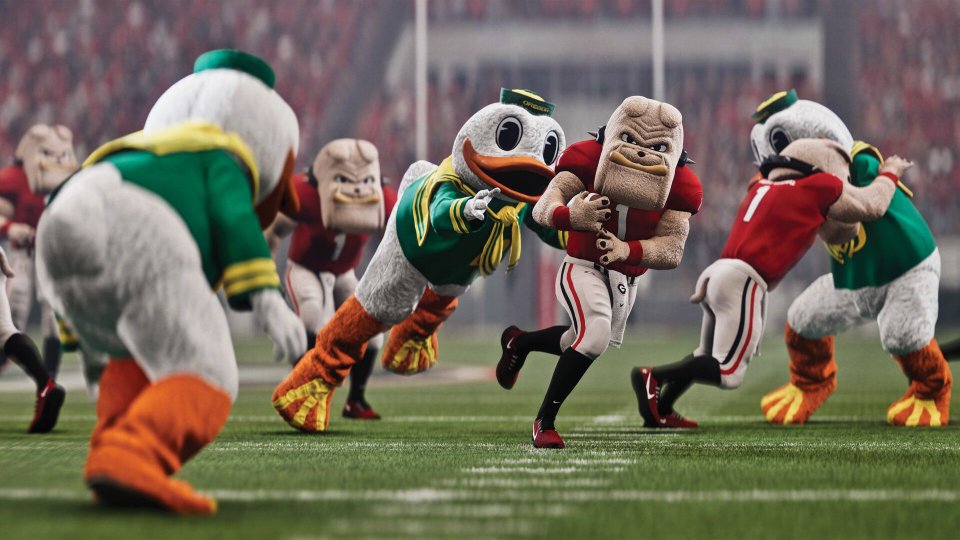
- Mascot Mashup is silly, chaotic, and exactly the kind of side mode this series needed back.
The bad
- Progression can feel too slow and too tangled in currencies, objectives, and unlocks.
- Road to Glory improves customization but still leans on awkward off-field busywork.
- Some menus and mode structures feel bloated instead of elegant.
- In-game purchases and random-item monetization cast a shadow over otherwise strong systems.
EA Sports College Football 27 understands the assignment the moment the band starts blaring. It is loud, colorful, sentimental, and proudly specific: the kind of sports game where a road night game feels different from a sleepy noon kickoff, where mascots matter, and where a third-and-long in a rivalry stadium can make a routine slant feel like a season-defining moment.
That sense of place is still the franchise’s biggest advantage over Madden. College football is inherently messier, more emotional, and more tradition-soaked than the professional game, and College Football 27 turns that chaos into a polished Saturday spectacle. The problem is that the game surrounding the football keeps trying to turn every long-term mode into a ledger. When College Football 27 lets you play, it sings. When it asks you to manage another objective track, currency, unlock gate, or progression menu, the fight song starts to fade.
Gameplay: the best reason to enroll
The on-field improvements are immediately noticeable. Standout athletes assert themselves more naturally, especially in the passing game. Route running has a better sense of timing and leverage, defensive backs react with more believable urgency, and one-on-one WR vs. DB battles now feel like small games inside the larger game. A star receiver finding space against press coverage is not just a ratings check; it feels like an event you can influence with timing, placement, and pre-snap recognition.
The streamlined pre-play adjustment system is one of the smartest changes. Sports games often confuse depth with button-chord homework, but College Football 27 makes more of its strategic options feel usable before the play clock becomes the real opponent. Shifting protection, tweaking coverage, and reacting to defensive tells is faster and cleaner, which makes the game more tactical without slowing it down.
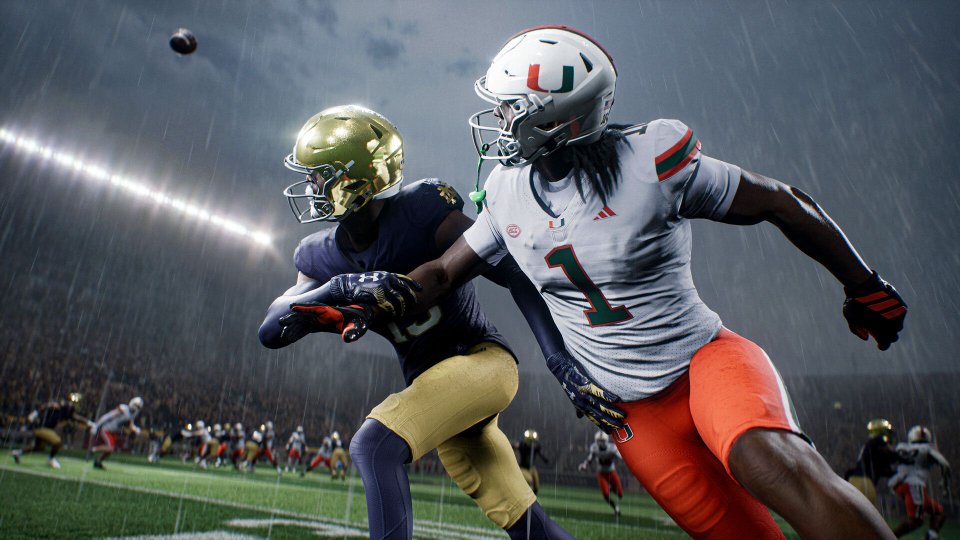
It is not flawless. Run-pass options can still feel more mechanical than organic, and there are moments where animation priority decides a collision before the player fully understands what happened. But the broader feel is excellent. Screens develop with real danger, returns have juice, and bad weather can turn a comfortable game plan into a scramble for field position. This is the rare annual sports sequel where “feel” is not just a marketing word. College Football 27 plays better.
Dynasty: Blueprint gives the mode a needed identity
Dynasty Blueprint is the headline feature, and it deserves the billing. Instead of merely stacking recruiting classes until your school becomes an unstoppable machine, you now have a clearer model for what kind of program you are building. Athletic Director Expectations add pressure beyond the win column, while Dynasty Points force you to make choices across recruiting, NIL, facilities, staffing, and long-term infrastructure.
The result is a mode with better storytelling. Turning a mid-tier school into a powerhouse is more interesting when you have to decide whether to chase a five-star wideout, upgrade facilities, keep a coordinator, or use NIL resources to stabilize the roster. There is a satisfying tension in knowing that every promise and investment shapes the next season before kickoff even arrives.
That said, Dynasty is also where the game’s modern sports-economy baggage becomes hardest to ignore. Even when the football logic is compelling, the interface can make program building feel overdesigned. There are a lot of meters, goals, rewards, and nudges competing for attention. College Football 27 wants Dynasty to feel like running a modern athletic department, and often succeeds. It also occasionally proves that modern athletic departments are exhausting.

Road to Glory: deeper, but still too fussy
Road to Glory benefits from expanded customization and new playable positions, including Tight End, Edge Rusher, and Free Safety. Those additions matter. A defensive career finally has more room to produce highlight-reel moments, and building a player around NIL deals, Heisman hopes, Draft Stock, and Legacy Score gives the mode a stronger role-playing frame.
The best parts are still the obvious ones: earning snaps, climbing the depth chart, delivering a breakout game, and watching your player’s profile grow from hopeful recruit to campus star. Unfortunately, Road to Glory still asks you to wade through too much friction to get there. Some objectives feel arbitrary, some progression beats feel slower than they should, and the surrounding life-sim decisions are not always interesting enough to justify how often they interrupt the football.
Mascot Mashup is ridiculous in the right way
Mascot Mashup is not deep, balanced, or especially serious. That is the point. Playing full 11-on-11 games with oversized school icons is a throwback to the series’ arcade soul, and it gives College Football 27 a pressure-release valve from the heavier systems elsewhere.
The mode works because it understands school spirit as comedy. The celebrations are goofy, the matchups are absurd, and the whole thing feels like a halftime fever dream that somehow escaped into the main menu. The unlock grind for more than 120 mascots could be friendlier, but the concept is too charming to dismiss. In a game so focused on NIL, staff budgets, and playoff rewards, a mode built around mascot nonsense feels weirdly essential.
Road to the College Football Playoff adds stakes, but also more grind
Road to the College Football Playoff is stronger this year because the new objective system gives each run more texture. Alternate uniforms, new playbooks, and other rewards make success feel more permanent, and tying rewards to performance gives online competition a better sense of purpose.
Still, College Football 27 sometimes confuses “more to earn” with “more fun.” Rewards are welcome when they reinforce your identity as a player or program. They are less welcome when they make the game feel like a checklist trying to keep you logged in. The objective system is a good idea, but it needs restraint.
Presentation: fireworks, bands, and Saturday identity
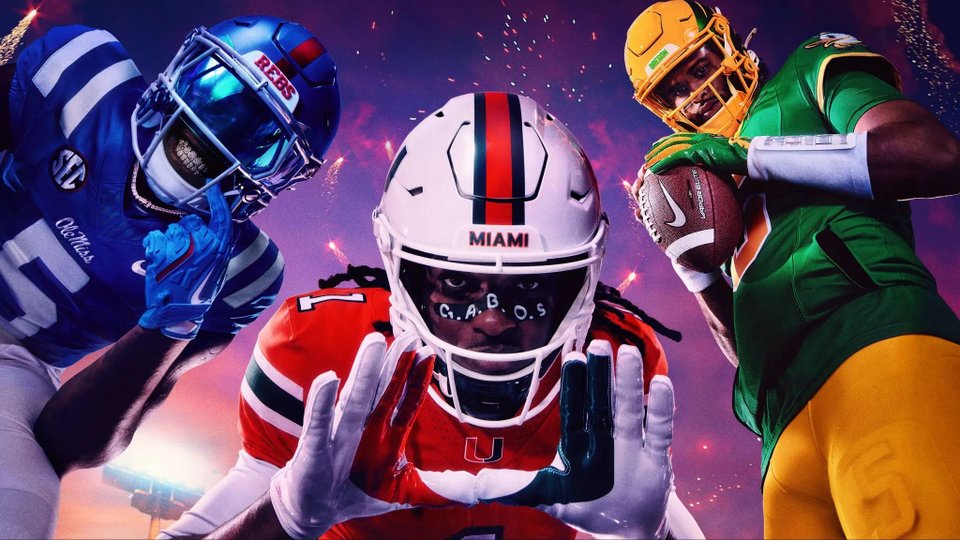
The provided cover-style art captures what College Football 27 does best: it sells Saturday as a spectacle. The fireworks, school colors, helmet close-ups, and sideline intensity are not window dressing. They are the emotional engine of the package, and EA Tiburon continues to make college football feel meaningfully different from a pro broadcast.
Stadium traditions, band energy, mascot antics, and weather-heavy rivalry moments give the game a sense of texture that helps carry it through weaker menus. Even when the mode economy gets tiring, the next big entrance, rain-soaked deep ball, or ridiculous mascot celebration can pull the game back into focus.
Verdict
EA Sports College Football 27 is a very good college football game and a more conflicted sports product. On the field, it is sharper, louder, and more strategically rewarding than last year’s entry. Dynasty Blueprint is a meaningful step forward, Mascot Mashup is delightful nonsense, and Road to Glory has a better foundation thanks to new positions and customization.
But the game is also too comfortable burying fun under progression friction. Its best modes are deeper, yet not always cleaner. Its reward systems add stakes, yet sometimes feel manipulative. And its monetization context makes every slow grind feel suspect, even when the core design is sound.
If you mainly want the best-feeling college football action available today, College Football 27 delivers. If you are exhausted by sports games that wrap excellent play inside too many currencies, objectives, and purchase-adjacent systems, consider this a talented team with a questionable playbook.
EA Sports College Football 27 details
- Developer
- EA Tiburon
- Publisher
- EA
- Platforms
- PC, PlayStation 5, Xbox Series X, Xbox Series S
- ESRB
- Everyone; Users Interact; In-Game Purchases; Includes Random Items
- Release
- July 9, 2027
- Multiplayer
- Online co-op, local co-op, online multiplayer, local multiplayer
- Cross-platform play
- Full
- Steam Deck
- Unknown