
Marvel Comics History
The History of Iron Man: How Tony Stark’s Armor Evolved Through Time
From a gray, clanking survival suit in 1963 to a symbol of high-tech heroism on the global movie screen, Iron Man’s evolution mirrors six decades of changing ideas about invention, power, responsibility, and the future.
Iron Man began as one of Marvel’s boldest contradictions: a wealthy weapons manufacturer turned superhero during the Cold War, created at a moment when readers were questioning industry, war, and authority. Instead of hiding from those tensions, the character put them inside the armor. Tony Stark’s greatest weapon was never just repulsor technology. It was reinvention.
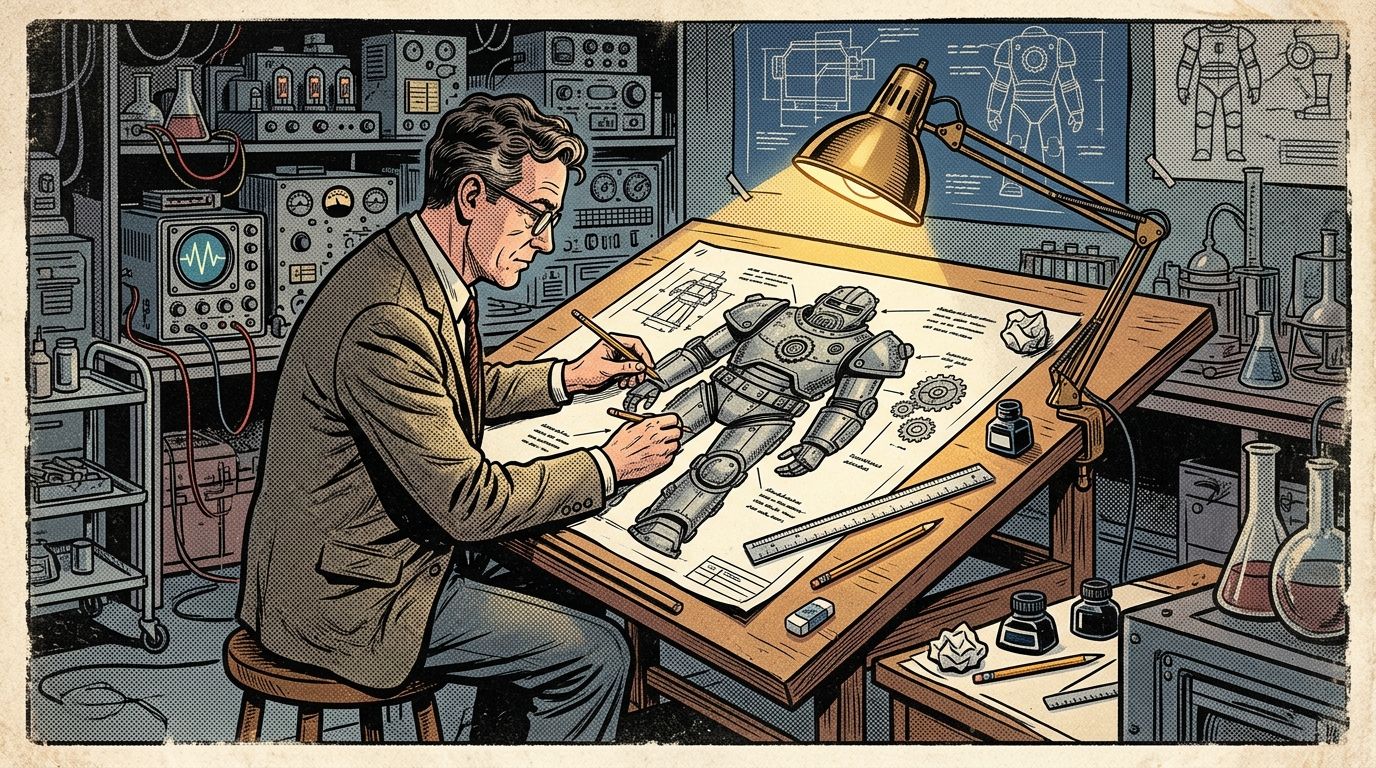
Created by editor and story architect Stan Lee, scripted by Larry Lieber, designed visually by Don Heck, and given an iconic early armor look by Jack Kirby, Iron Man first appeared in Tales of Suspense #39 in March 1963. His original story was built around survival: Stark, wounded and captured, constructs a powered suit to keep his heart alive and escape captivity. That origin established the character’s central engine: technology can save a life, but the person inside must decide what that life is for.
Iron Man is a story about upgrades—mechanical, moral, and cultural.
Every major era changes the armor, but the more important evolution is Tony Stark’s struggle to become worthy of the power he builds.
1960s–1970s
From Cold War invention to modern Marvel icon
In the earliest stories, Iron Man reflected 1960s anxieties about espionage, industrial might, and military technology. The first armor was bulky and gray, closer to a mobile iron lung than a sleek superhero costume. Soon after, Marvel recolored the suit gold, then refined it into the now-famous red-and-gold silhouette. This visual change mattered: Iron Man shifted from emergency machine to aspirational icon.
As Marvel’s universe expanded, Tony Stark became a founding Avenger, a public industrialist, and a hero whose identity was tied to innovation. Unlike many superheroes, he did not gain powers through accident, mutation, or mythology. He built them. That made Iron Man one of comics’ clearest expressions of human ingenuity—and human fallibility.
1979–1980s
Demon in a Bottle and the human inside the machine
One of the defining moments in Iron Man history came with Demon in a Bottle, the influential 1979 storyline that confronted Tony Stark’s alcoholism. It deepened the character by showing that the armor could not solve every problem. The same intellect that built miracles could also hide pain, ego, and dependency.
This era made Iron Man more than a flashy tech hero. It introduced a pattern that would return again and again: Tony’s greatest battles often begin as internal conflicts before they become armored confrontations. The suit grows more advanced, but the person wearing it must keep evolving too.
Armor evolution
A timeline of Iron Man’s changing identity
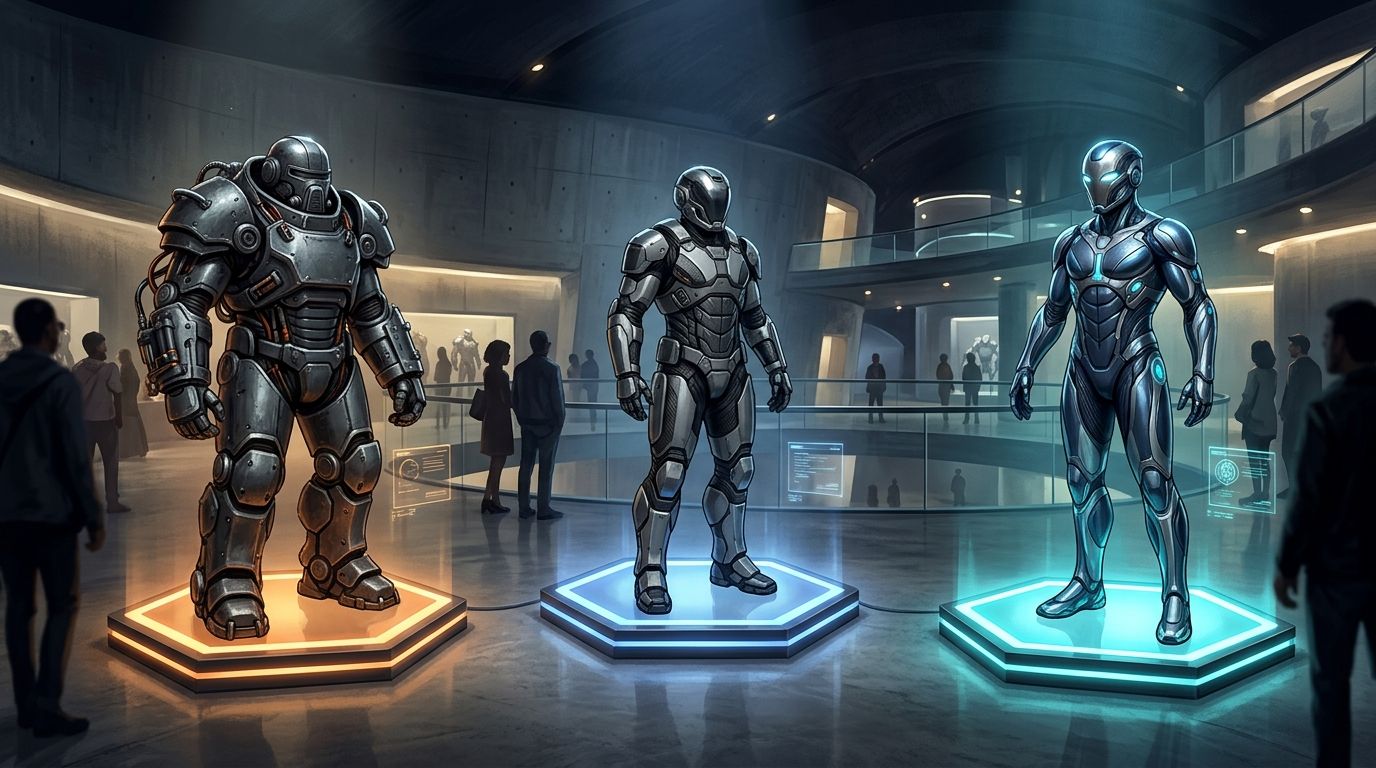
Iron Man’s armor has always been a visual timeline of technology, culture, and storytelling priorities. Each upgrade answers a different question: How does Tony survive? How does he protect others? How far should technology go?
The gray survival suit
The first armor is crude, heavy, and practical. It keeps Tony alive and helps him escape, making the suit a symbol of necessity before heroism.
Gold, then red and gold
The design becomes brighter and more heroic, transforming Iron Man into a visually distinct Marvel figure.
Specialized armor
Space armor, stealth armor, and modular concepts begin turning Iron Man into a platform for endless invention.
Extremis and biology-meets-tech
The Extremis era pushes the idea that the boundary between Tony Stark and his machine can become dangerously thin.
The cinematic armor age
The Marvel Cinematic Universe turns the suit into a global design language: mechanical assembly, glowing arc reactors, nanotech, and emotional sacrifice.
2008 and beyond
The MCU made Iron Man the face of modern superhero cinema
When Iron Man arrived in 2008, the character was respected by comic fans but not yet the mainstream titan he would become. Robert Downey Jr.’s portrayal fused arrogance, wit, anxiety, and charm into a version of Tony Stark that defined the Marvel Cinematic Universe from its first film.
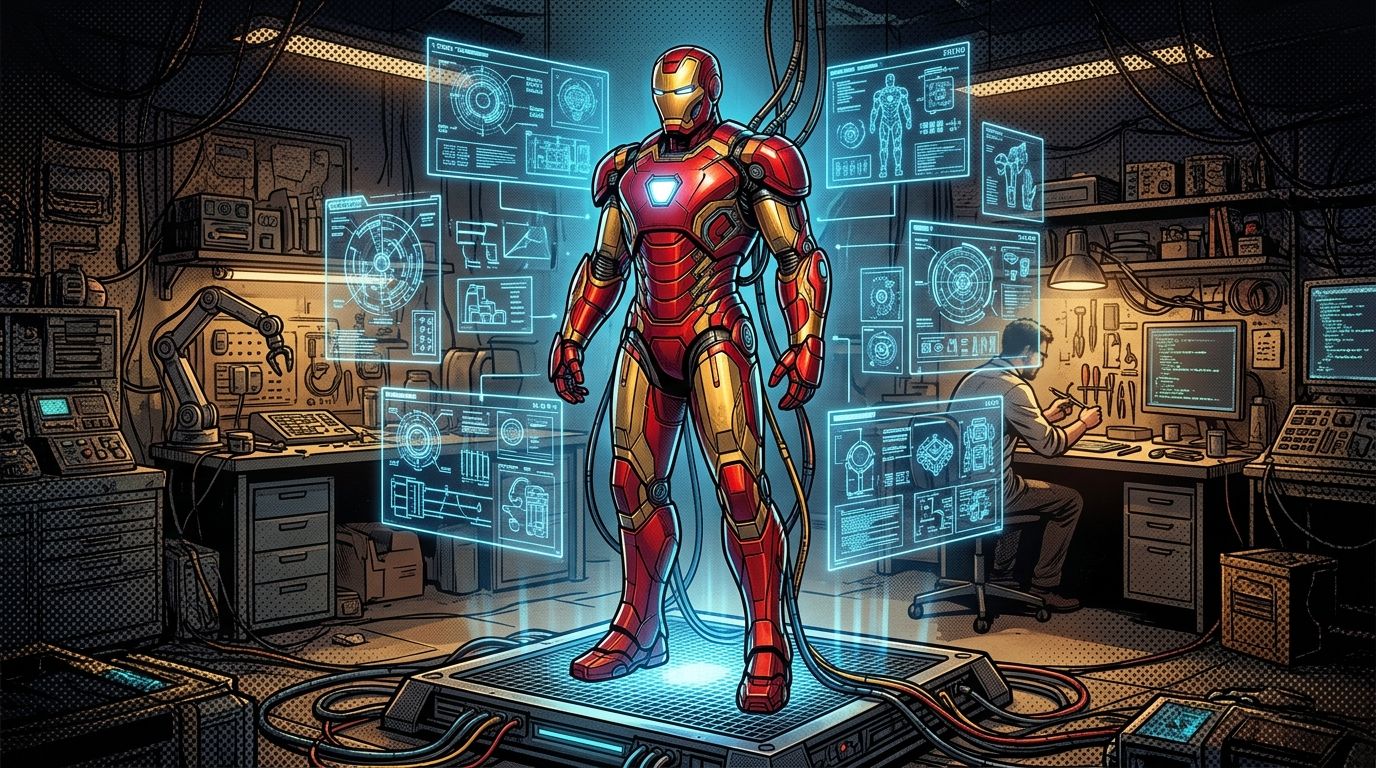
The movie modernized the origin around contemporary conflict, corporate accountability, and personal responsibility. It also made the armor feel tactile: bolts, servos, HUD displays, flight tests, damage, and repair. Viewers did not just see Iron Man wear technology; they watched him prototype it.
Across the MCU, the armor became faster, lighter, more automated, and eventually nanotech-based. Yet the emotional arc moved in the opposite direction: Tony became less protected by the suit and more willing to risk himself for others. By Avengers: Endgame, Iron Man’s story had evolved from self-preservation into self-sacrifice.
Why Iron Man still matters
The legacy of Tony Stark’s evolution
Iron Man endures because he turns a simple fantasy—what if a person could build a better self?—into a complicated question. The armor is thrilling, but it is also a test. Every upgrade asks whether Tony is becoming more responsible or simply more powerful.
That tension keeps the character relevant in eras shaped by artificial intelligence, automation, surveillance, billion-dollar tech companies, and debates over who controls innovation. Iron Man’s history is not just about a superhero who changes suits. It is about a culture trying to decide what progress should look like, and what kind of person should be trusted to build it.
Iron Man history: quick answers
When did Iron Man first appear?
Iron Man first appeared in Tales of Suspense #39, published by Marvel Comics in 1963.
Who created Iron Man?
Iron Man was developed by Stan Lee, Larry Lieber, Don Heck, and Jack Kirby, with each contributing to the character’s concept, scripting, and early visual identity.
Why is Iron Man’s armor so important?
The armor is both a superpower and a metaphor. It represents survival, invention, ego, protection, and the constant need to improve.
How did the MCU change Iron Man?
The MCU made Iron Man a global pop-culture icon by emphasizing Tony Stark’s personality, the engineering process behind the suits, and a long emotional arc from self-interest to sacrifice.