
Review
Baldur’s Gate 3 Review: A Complete RPG Built Around Player Freedom
Larian Studios’ Dungeons & Dragons epic is not merely big. It is generous, reactive, strange, funny, punishing, romantic, and brave enough to let players miss entire pockets of brilliance.

Review Summary
What Works
- Astounding quest reactivity and missable world interactions
- Deep tactical combat built on D&D systems without losing cinematic momentum
- Companions whose romances, flaws, betrayals, and loyalties feel authored with care
- A world that rewards curiosity more than checklist completion
What Holds It Back
- Inventory management can become busywork
- Occasional bugs and edge-case quest weirdness are easier to find because the simulation is so ambitious
- New players may need time to understand action economy, spell slots, and party composition
Baldur’s Gate 3 begins with a nightmare: abducted by mind flayers, infected with a parasite, and stranded in a realm where devils, deities, cults, and otherworldly powers are all pulling in different directions. That premise could have supported a straightforward heroic campaign. Instead, Larian Studios uses it as the foundation for something far more special: a role-playing game that treats player agency as sacred.
This is one of the most complete video games ever put together. Its approach to design feels pure in a way that has become rare. Where many modern blockbuster games bend their systems around monetization funnels, risk management, or a corporate idea of “engagement,” Baldur’s Gate 3 bends almost everything toward the player’s lived experience. It wants you to wonder if something might work, try it, and then discover that someone at Larian probably anticipated your ridiculous idea.
A Love Letter to the Art Form
The most impressive thing about Baldur’s Gate 3 is not just its main storyline, though that story is consistently gripping. The real magic is in the countless micro-interactions scattered across the journey: a spell used outside combat, an animal spoken to at the right time, a corpse interrogated for one last clue, a shove that turns a hard fight into a comedy of physics, a companion approving of something you did not even realize was being judged.
Many of those moments are mutually exclusive. Many are missable. Some are tucked behind class choices, race-specific dialogue, origin-character paths, dice rolls, romances, betrayals, or simply the fact that you walked left instead of right. That is the courageous part. Larian invested enormous effort into scenes and consequences that a large percentage of players may never see in one playthrough. The result is not “content” in the disposable sense; it is authorship that trusts the player to have a unique story.
Choice, Consequence, and the Joy of Missing Out
Baldur’s Gate 3 understands that meaningful choice requires loss. If every route eventually funnels into the same reward, choice becomes decoration. Here, decisions can lock doors, open stranger ones, alter relationships, change fights, or reframe entire questlines. It is possible to solve problems through violence, stealth, persuasion, deception, magic, environmental manipulation, or a deeply unwise combination of all of them.
That reactivity gives the game its unusual texture. A quest is rarely just a quest marker. It is a cluster of characters, systems, secrets, and moral pressure. The Forgotten Realms feel alive because the game is willing to let the world push back. You can be noble, selfish, cruel, reckless, diplomatic, romantic, or power-hungry, and the campaign makes room for those choices without flattening them into a simple good-or-evil meter.
Combat That Rewards Creativity
Turn-based combat in Baldur’s Gate 3 is approachable enough to enjoy as a cinematic adventure, but deep enough to remain fascinating for dozens upon dozens of hours. Positioning matters. Surfaces matter. Height matters. Initiative, spell slots, advantage, reactions, summons, stealth, and improvised objects all become part of the tactical language.
The best fights feel less like static encounters and more like problems with multiple possible solutions. You might win through careful crowd control, explosive barrels, environmental hazards, verticality, or one desperate spell cast at exactly the right moment. The Divinity 4.0 engine gives Larian’s systemic instincts a more cinematic shape, and the result is a game where tabletop-style improvisation survives the move to a digital RPG better than anyone had a right to expect.
Companions Worth Caring About
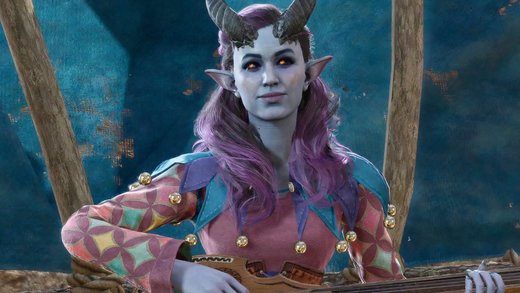
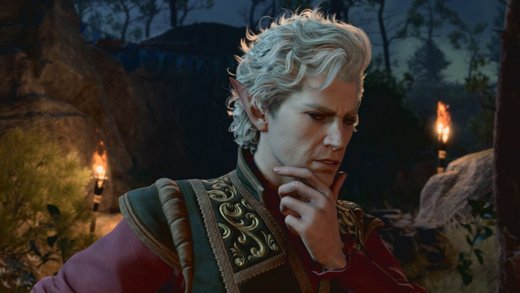
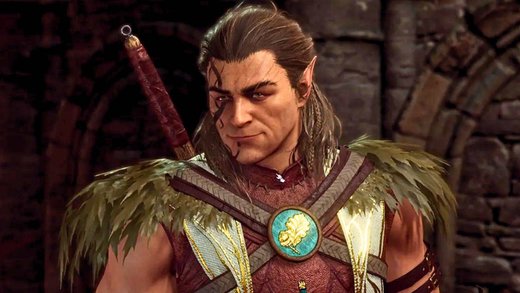
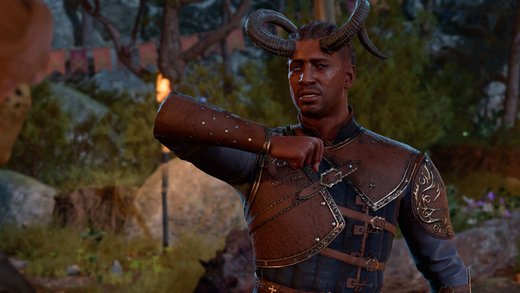
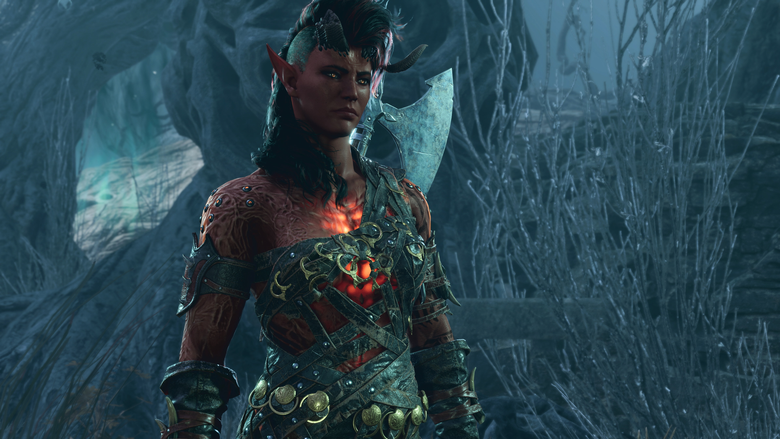
The party is the emotional engine of the entire adventure. Characters such as Shadowheart, Astarion, Wyll, Karlach, Gale, and Lae’zel are not just combat roles with dialogue trees attached. They carry fears, ideologies, secrets, trauma, vanity, humor, and temptation. They can surprise you. They can disappoint you. They can become better, worse, closer, or more distant depending on what you do and what you ask them to become.
The romance and friendship systems work because they are not isolated minigames. They are woven into the broader moral fabric of the campaign. Fellowship and betrayal are not abstract themes here; they are the texture of camp conversations after a terrible decision, the silence after a confession, or the moment a companion chooses whether to trust you when power is finally within reach.
Companion Focus
A Party Full of Personality
Much of Baldur’s Gate 3’s staying power comes from how vividly its companions and supporting characters read on screen. Even a quiet camp conversation can feel like a key scene because each character carries a clear sense of history, desire, and danger.
Presentation and Performance
Baldur’s Gate 3 is often beautiful in the way great fantasy art is beautiful: theatrical, grotesque, ornate, and full of mood. The cinematic dialogue camera brings the player close to faces and performances, making conversations feel more intimate than the top-down RPG format usually allows. Its environments range from fungal underworlds and cursed battlefields to lavish city spaces, each packed with objects worth inspecting and corners worth testing.
It is not flawless on a technical level. A game this reactive can produce odd bugs, and inventory friction remains one of the few systems that regularly gets in the way of the fantasy. But those issues feel like rough edges on a monumental achievement rather than symptoms of a compromised design philosophy.
Baldur’s Gate 3 Details
- Developer
- Larian Studios
- Publisher
- Larian Studios
- Release Date
- August 3, 2023
- Engine
- Divinity 4.0
- ESRB
- Mature 17+ for blood and gore, partial nudity, sexual content, strong language, and violence
- Multiplayer
- Online co-op and local co-op for parties of up to four players
- Cross-Platform Play
- Full
- Cross Save
- Full cross-platform progression
- Steam Deck
- Verified
Playable Platforms and System Companies
Baldur’s Gate 3 is playable across current consoles and computer platforms, with the following system/platform company context:
| Platform/System | Parent Company or Platform Owner | Notes |
|---|---|---|
| PlayStation 5 | Sony / Sony Interactive Entertainment | Console version with controller-first interface support. |
| Xbox Series X | Microsoft | Current-generation Xbox version. |
| Xbox Series S | Microsoft | Current-generation Xbox version for Microsoft’s smaller Series console. |
| PC / Windows PC | Microsoft for the Windows platform; broader PC ecosystem varies by hardware maker | Keyboard-and-mouse or controller support, with broad storefront availability. |
| macOS / Mac | Apple | Mac version for Apple computers. |
| Steam Deck | Valve | Verified compatibility for Valve’s handheld PC gaming system. |
Verdict
Baldur’s Gate 3 is a landmark RPG because it understands that games are strongest when they let players inhabit possibility. It is a grand cinematic campaign, a tactical playground, a romance simulator, a comedy machine, a tragedy generator, and a Dungeons & Dragons adaptation that actually captures the spirit of sitting at a table and asking, “Can I try something strange?”
Its greatest triumph is that it never feels engineered merely to be consumed. It feels built to be lived in, argued with, broken, mourned, replayed, and remembered. For players who value choice, character, systems, and the thrill of discovering something that feels like it was meant only for them, Baldur’s Gate 3 is essential.
For more launch-era critical context, the community discussion around the Baldur’s Gate 3 review thread on Reddit captured just how quickly the game became a major talking point for RPG fans.