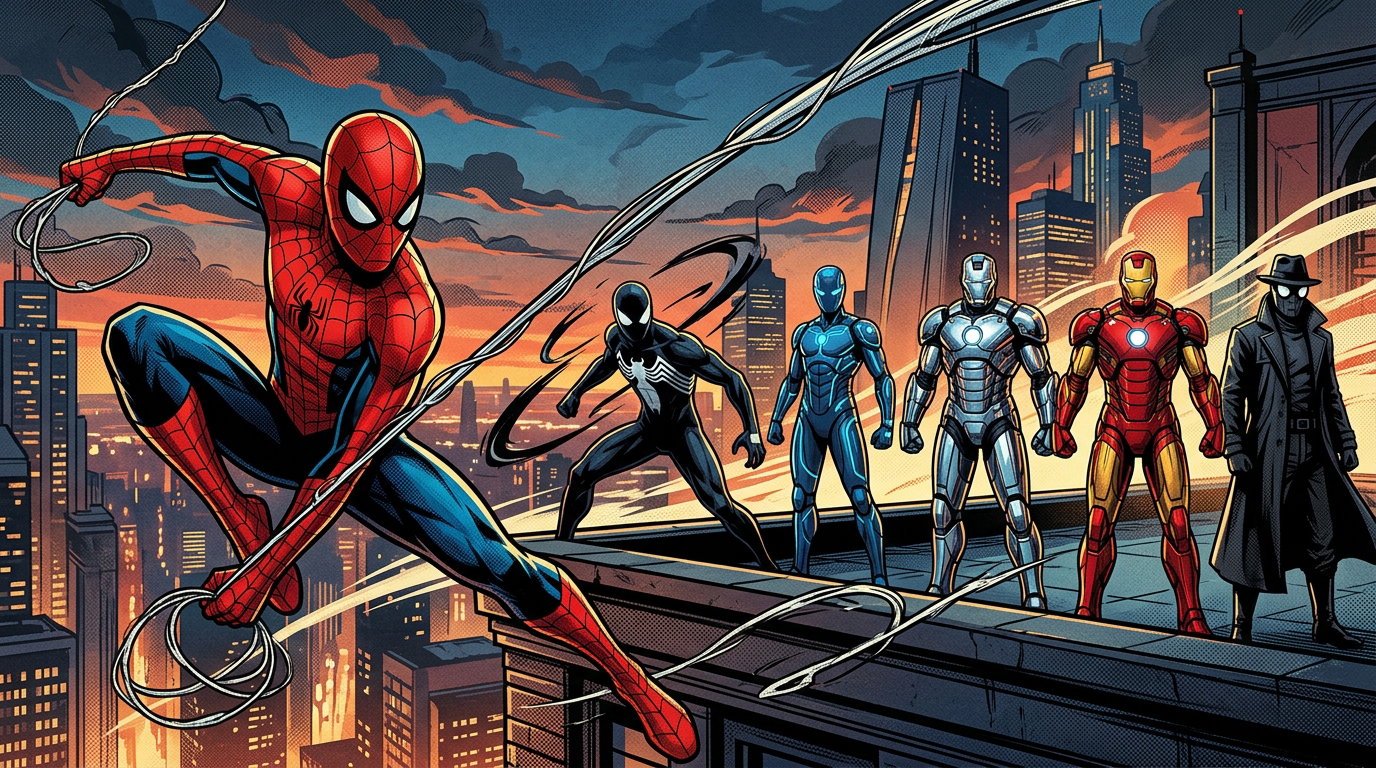
Spider-Man’s Suit Evolution, Ranked By Style And Story
From Ditko’s original red-and-blue miracle to symbiote drama, Stark-tech flexing, neon stealth, and game-era redesigns, Spidey’s closet is basically fashion week with concussions.
Updated hub format12 major suit erasFacts, style scores & snark included
Quick Answer: Why The Suit Matters
Spider-Man’s costume is not just a mask and tights. It is a mood ring for Peter Parker’s life: homemade ambition, alien temptation, clone-saga streetwear, armor for trauma, and high-tech upgrades when someone with money finally notices the poor kid is fighting gods in pajamas.
The core truth has barely changed since Amazing Fantasy #15: the suit works best when it makes Peter look small, fast, human, and stubborn enough to keep getting back up. In other words, “with great power there must also come—great responsibility,” plus laundry detergent strong enough to remove rooftop grime and goblin smoke.
The best Spider-Man suit is the one that tells you what era of Peter’s disaster calendar you’re looking at.
Editorial verdict: style is story, and Peter’s story has bills.
1900s
The 20th-Century Icons
The era that created the visual language: bug eyes, webbing, impossible flexibility, a cursed black upgrade, and one very 90s hoodie that somehow still rules.
Classic Red-and-Blue
1962Amazing Fantasy #15Steve Ditko template
The original is weird in the exact right way: full mask, web pattern, giant expressive lenses, and a chest emblem that reads instantly from across a comic panel. It made Spider-Man look less like a Greek statue and more like a teenager who could crawl across your ceiling. Creepy? A little. Iconic? Absolutely.
Style DNA
Black Symbiote Suit
1984Secret Wars #8ASM #252 reveal
Minimalist, menacing, and wildly convenient until it turns out the costume is a clingy alien parasite. The white spider mark is one of comics’ best “less is more” moves. Shame about the whole living-weapon-with-boundary-issues situation, but nobody said fashion was emotionally healthy.
Drama
Spider-Man 2099
1992Miguel O’HaraSpider-Man 2099 #1
Miguel O’Hara’s suit brings talons, a skull-ish spider emblem, and a torn web-cape that says the future is stylish, angry, and probably owned by a corporation with terrible HR. It is cyberpunk without forgetting the “spider” part.
Future Fit
Spider-Armor Mk I
1993Web of Spider-Man #100Bullet-stopper
Peter built the first Spider-Armor to survive high-caliber fire. It looked like a silver action figure variant designed by a toy executive who just found the word “foil.” Still: practical, memorable, and very shiny for someone trying not to get shot.
Armor Mood
Scarlet Spider Hoodie
1994Web of Spider-Man #118Ben Reilly
Red bodysuit. Blue sleeveless hoodie. External web-shooters. Ankle pouches. The Scarlet Spider is peak 90s, but in the cool “skate shop vigilante” way, not the “sixteen unnecessary belt straps” way. Ben Reilly understood branding before half of Marvel did.
Streetwear
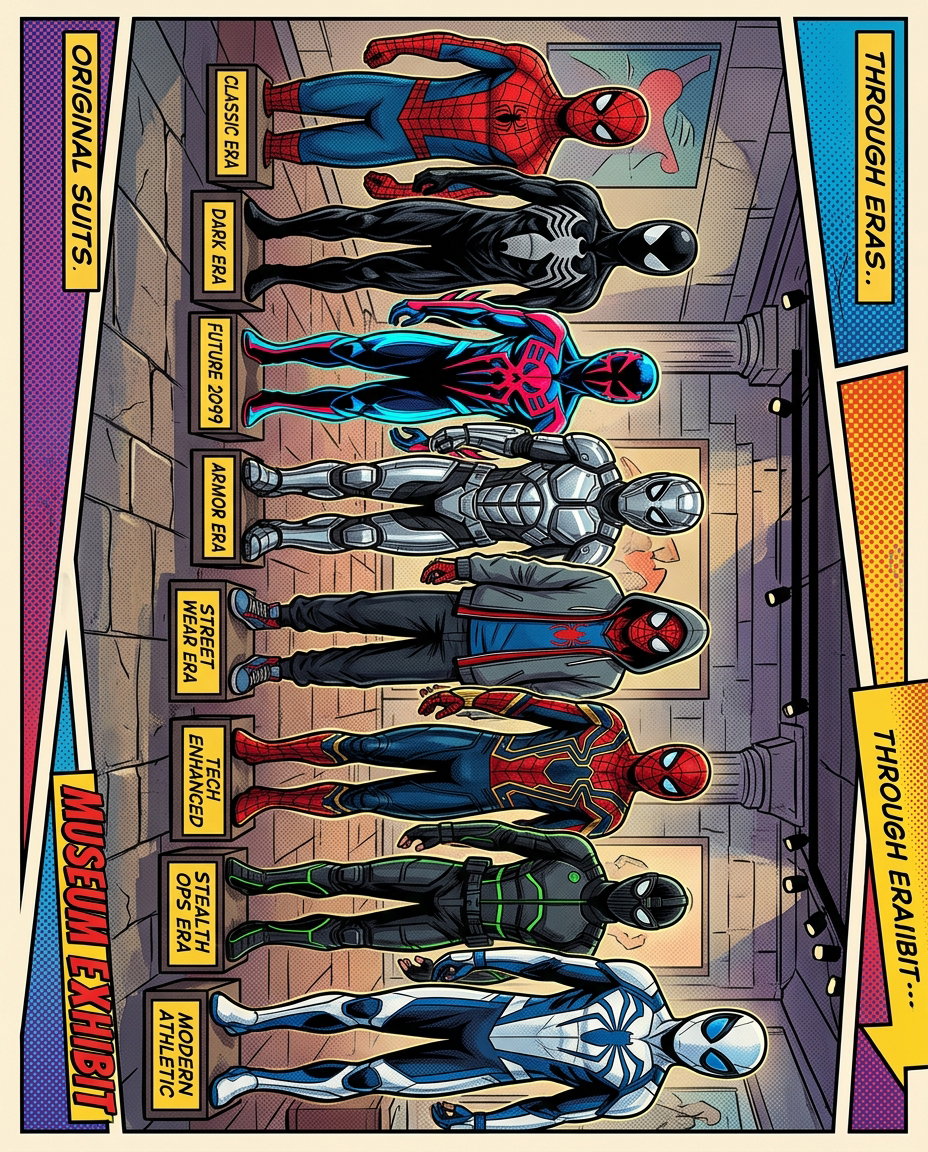
Visual Guide: The Closet Gets Weird
Original generated artwork: an era-by-era suit rack inspired by Spidey’s fashion chaos.
Red-and-blue is the control group.
Every redesign either honors the classic silhouette, rejects it, or panics and comes crawling back to it.
Black suits mean trouble.
Symbiote, stealth, noir—if the palette goes dark, someone is either brooding or about to make a life choice Aunt May would side-eye.
Armor means escalation.
Peter usually upgrades when guns, wars, or billionaire mentors make cotton spandex look like a lawsuit waiting to happen.
2000s
The Modern Upgrade Era
After 2000, the suits became louder, smarter, and more specialized. Sometimes that meant genius design. Sometimes it meant Peter letting a billionaire put spyware-adjacent gadgets near his kidneys. Progress!
Iron Spider Armor
2006Amazing Spider-Man #529Tony Stark tech
The Iron Spider’s red-and-gold armor, retractable mechanical arms, scanners, and glider mesh made Peter look like he finally got a benefits package. It also arrived during Civil War, so yes, the drip came with political baggage. Very Stark. Very shiny. Very “read the fine print.”
Tech Flex
Spider-Man Noir
2009Spider-Man: Noir #1Great Depression grit
Trench coat, goggles, dark textures, and a whole lot of “I smoke metaphorically in alleyways.” Noir turns Spider-Man from flexible neighborhood nuisance into pulp vigilante. The style is so sharp it makes grayscale feel expensive.
Atmosphere
“Big Time” Stealth Suit
2011Amazing Spider-Man #650Light & sound stealth
Built to counter Hobgoblin tech, the Big Time suit bends light and sound while glowing in neon highlights. Is it stealthy? In comic-book science terms, yes. In “why are you glowing green on a rooftop” terms, maybe calm down, Peter.
Gadget Brain
Spider-Armor Mk II
2011Amazing Spider-Man #656Bullet-resistant
When Peter temporarily lost his Spider-Sense, he compensated the responsible way: by inventing sleeker armor. The Mk II kept the protective idea of the Mk I but ditched most of the “refrigerator cosplay” problem.
Survival
Superior Spider-Man Suit
2013Otto Octavius eraTalons & menace
Otto Octavius in Peter’s body redesigned the look into something harsher: black-red palette, sharper lenses, talons, and eventually extra spider-arms. It is what happens when your substitute Spider-Man thinks “friendly neighborhood” is a performance review weakness.
Menace
Advanced Suit
2018Marvel’s Spider-Man PS4White spider emblem
Insomniac’s Advanced Suit modernized the classic with athletic materials, protective white accents, and a massive white spider that looked risky until everyone admitted it slapped. It is the rare redesign that feels new without throwing Ditko into a dumpster.
Modern Icon
MCU Stealth Suit / “Night Monkey”
2019Far From HomeTactical disguise
Nick Fury’s black tactical suit helped Peter operate in Europe without being obviously Spider-Man. Then Ned called him “Night Monkey,” and somehow everyone had to keep a straight face. The suit is cool. The name is a misdemeanor.
Covert Ops
What Makes A Great Spider-Man Suit?
Readable silhouette.
Spider-Man has to be recognizable while curled into a physics-defying pretzel mid-swing. Big eyes, clean chest mark, strong color blocking: that’s the recipe.
Story-first design.
The symbiote tells temptation. Iron Spider tells mentorship and control. Scarlet Spider tells clone identity crisis, but with a hoodie that absolutely paid rent.
Function with personality.
Peter is a broke genius. His best suits feel clever, handmade, and slightly held together by stress, caffeine, and one alarming YouTube tutorial.
Final Verdict: Classic Wins, But The Closet Is Stacked
The classic red-and-blue still takes the crown because every other suit is in conversation with it. The black suit is the best dramatic remix, the Iron Spider is the loudest tech flex, the Scarlet Spider is the streetwear MVP, and the Advanced Suit is the strongest modern reinvention. Spider-Man’s real superpower may be surviving trauma, quipping through it, and somehow making spandex historically significant.
Source Notes
Dates and first appearances were cross-checked against Marvel articles, PlayStation/Insomniac notes, and issue-guide references during the earlier fact check.
Marvel: black suit history and Secret Wars #8 debut.
Marvel: Iron Spider history and Amazing Spider-Man #529.
PlayStation Blog: Insomniac Advanced Suit design notes.
Issue guides for Amazing Fantasy #15, Web of Spider-Man #100, Web of Spider-Man #118, Amazing Spider-Man #650, and Amazing Spider-Man #656.