
Review
Splatoon Raiders Review: Nintendo’s Ink-Stained Loot Loop Works
Nintendo’s first big Splatoon spin-off swaps Turf War for treasure raids, gadget tinkering, and Salmonid swarms — and the result is a surprisingly confident action-RPG built for solo players first.
Quick Verdict
Splatoon Raiders is the most convincing argument yet that Splatoon can thrive without competitive PvP at its center. Its handcrafted raids, elastic gadget builds, and smart co-op scaling make it one of the strongest early showcases for Nintendo Switch 2, even if its story and environments cannot always match the mechanical sparkle.
- DeveloperNintendo EPD
- PublisherNintendo
- Playable PlatformNintendo Switch 2 (Nintendo)
- Release DateJuly 23, 2026
- ESRBEveryone 10+ / Fantasy Violence
- MultiplayerOnline co-op, local co-op
A Spin-Off That Understands the Assignment
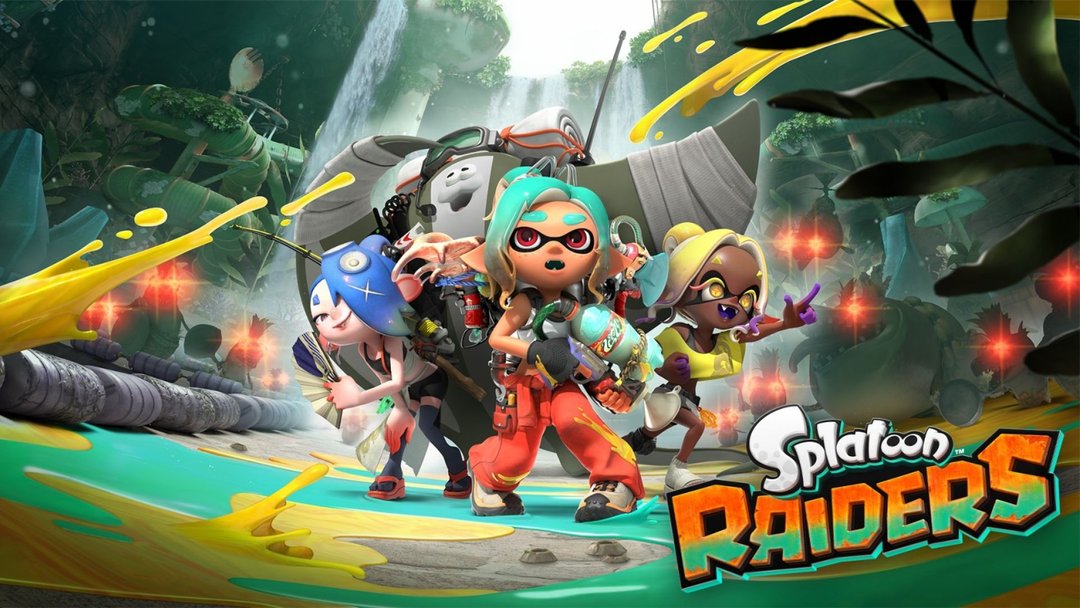
Splatoon Raiders sounds like the sort of genre pivot that could easily dilute what makes the series special. Instead of symmetrical arena battles, it sends a customizable mechanic to the mysterious Spirhalite Islands with Deep Cut — Shiver, Frye, and Big Man — acting as treasure-hunting partners. The hook is simple: raid compact missions, splatter Salmonids, recover resources, return to base, upgrade your gadgets, and launch again with a stranger, sharper build.
The pleasant surprise is how naturally that loop fits Splatoon. Movement still has the familiar rhythm of painting a path, diving into ink, popping out for a burst of damage, and vanishing again before the arena collapses around you. What changes is the reason you keep doing it. Raiders is not chasing ranked momentum or fashion bragging rights; it is chasing the next useful part, the next strange gadget interaction, and the next mission that makes your current loadout feel either brilliant or embarrassingly undercooked.
That structure gives Nintendo EPD room to treat Splatoon’s combat like a toy box. The game is still approachable and bright, but it has more RPG bite than the series’ previous campaigns. You are not just getting better at aiming. You are learning how a tool kit works, where it breaks, and how to rebuild it into something ridiculous.
Gadgets Make the Ink Sing
The mechanic fantasy is Raiders’ best idea. Your weapons retain Splatoon’s splattery personality, but they now sit beside a flexible gadget system that gives every run a stronger sense of authorship. Mobility tools, crowd-control devices, burst-damage options, deployables, and defensive tricks all compete for space in your kit. A straightforward shooter build works, but the real fun is discovering combinations that feel like you got away with something.
One loadout might turn you into a slippery duelist, chaining evasive movement with close-range punishment. Another might lean into traps and persistent damage, letting you control lanes while Salmonids stumble through your setup. The best builds are not just stronger; they change your posture. You start reading arenas differently, prioritizing enemy types differently, and taking risks that would have been foolish with another kit.
Progression lands because upgrades are usually tangible. Numbers go up, yes, but the meaningful rewards are new cooldown rhythms, larger effects, longer windows, better survivability, or synergies that were only theory an hour earlier. Raiders understands the core promise of loot-driven action: a reward should make you want to immediately test a new idea.
Short Missions, Smart Pressure
The Spirhalite Islands are divided into bite-sized raids, and that brevity is crucial. Most missions are short enough that failure rarely feels punitive, but dense enough that they still ask for real decision-making. The game keeps changing the question: survive a wave, route through a platforming gauntlet, clear a timed challenge, focus down a dangerous enemy, mine resources while judging when to extract, or solve a loadout-specific puzzle that doubles as a stealth tutorial for a gadget you may have ignored.
Salmonids are a strong fit for this format. Their familiar push-and-disrupt behavior gives encounters readable chaos, and the handcrafted layouts make them feel more deliberate than random wave defense. The best levels play like combat puzzles: identify the enemy that is warping the room, decide whether to spend a gadget charge now or save it for the next rush, then paint an escape route before confidence turns into a wipe.
Difficulty is another strength. Raiders can be forgiving if you want the breezy adventure, but higher settings expose how much design is hiding under the neon. The game is willing to let you attempt raids above your comfort level, and it is better for it. Clearing one of those missions early with a clever build creates the sort of personal story loot games are supposed to manufacture.
Co-op Adds Chaos Without Breaking Progress
Although Raiders is single-player-focused, co-op is far from an afterthought. Up to four players can raid together online or locally, and the individual reward structure avoids the usual problem of one player feeling like they are wasting time in someone else’s campaign. Level scaling also keeps mixed groups from turning every stage into a carry session, which is exactly the kind of practical design Splatoon’s online history has not always nailed.
Deep Cut’s role in solo play helps the adventure feel less lonely, too. Having one member raid alongside you in a powerful bot is a smart compromise: you get the fantasy of a crew without the game demanding that you coordinate with other humans. It also reinforces Raiders’ swashbuckling tone, even when the story itself is more charming texture than memorable drama.
Co-op does change the flavor. With friends, Raiders becomes louder, easier to brute-force, and more about spectacle than solving the room. That is fun, especially in postgame cleanup, but solo play is where the level design feels sharpest. If you care about the campaign’s challenge curve, play much of it alone first, then invite friends when you are ready to farm, experiment, and laugh at the screen-filling mess.
Where the Ink Runs Thin
For all its strengths, Splatoon Raiders is not flawless. The biggest letdown is visual variety. The island premise suggests a wilder sense of place than the game consistently delivers, and several areas lean on muted caves, industrial scraps, and repeated layouts longer than they should. Performance is impressively steady, especially when raids flood the screen with enemies and ink, but the art direction is less instantly iconic than Splatoon at its most stylish.
The story is similarly lightweight. Deep Cut brings personality, and the treasure-hunt setup is a clean excuse to keep moving, but the narrative rarely becomes more than connective tissue between missions. That is not fatal for a build-driven action game, yet it does leave the campaign feeling more mechanically memorable than emotionally resonant.
Raiders also needs a few quality-of-life improvements. Crafting and upgrade menus can become busy once you are juggling multiple gadget paths, and the game would benefit from clearer material tracking or a wishlist system. Late-game repetition creeps in as well. The loop remains satisfying, but after dozens of raids the thrill depends heavily on whether you are still finding new builds to chase.
Pros
- Gadget system creates expressive, satisfying buildcrafting.
- Short raid structure keeps progression brisk and replayable.
- Salmonid encounters feel tactical in handcrafted spaces.
- Co-op scaling and individual rewards are smartly handled.
- Strong performance on Nintendo Switch 2.
Cons
- Environmental variety is weaker than the series’ best art direction.
- Story is charming but thin.
- Crafting menus could use better material tracking.
- Some late-game raids can blur together.
Final Verdict
Splatoon Raiders is a bold spin-off that succeeds because it does not abandon Splatoon’s identity; it reframes it. Painting the floor is still movement, survival, offense, and self-expression all at once. The difference is that Raiders attaches that language to a loot loop with real teeth, where gadgets and upgrades give you reasons to keep rebuilding yourself between missions.
Its repeated environments and thin storytelling keep it just short of essential masterpiece territory, but the foundation is excellent. As a solo-first action-RPG with seamless co-op support, Splatoon Raiders proves the series has more range than its competitive roots suggested. For Switch 2 owners, it is an easy recommendation — especially for players who like their shooters colorful, clever, and just a little obsessed with buildcrafting.
Excellent