ThePremium.com Watch Guide
The Best Watches for Small Wrists, Measured Not Guessed
Case diameter is the number everyone quotes. Lug-to-lug is the number that decides whether a watch actually fits.
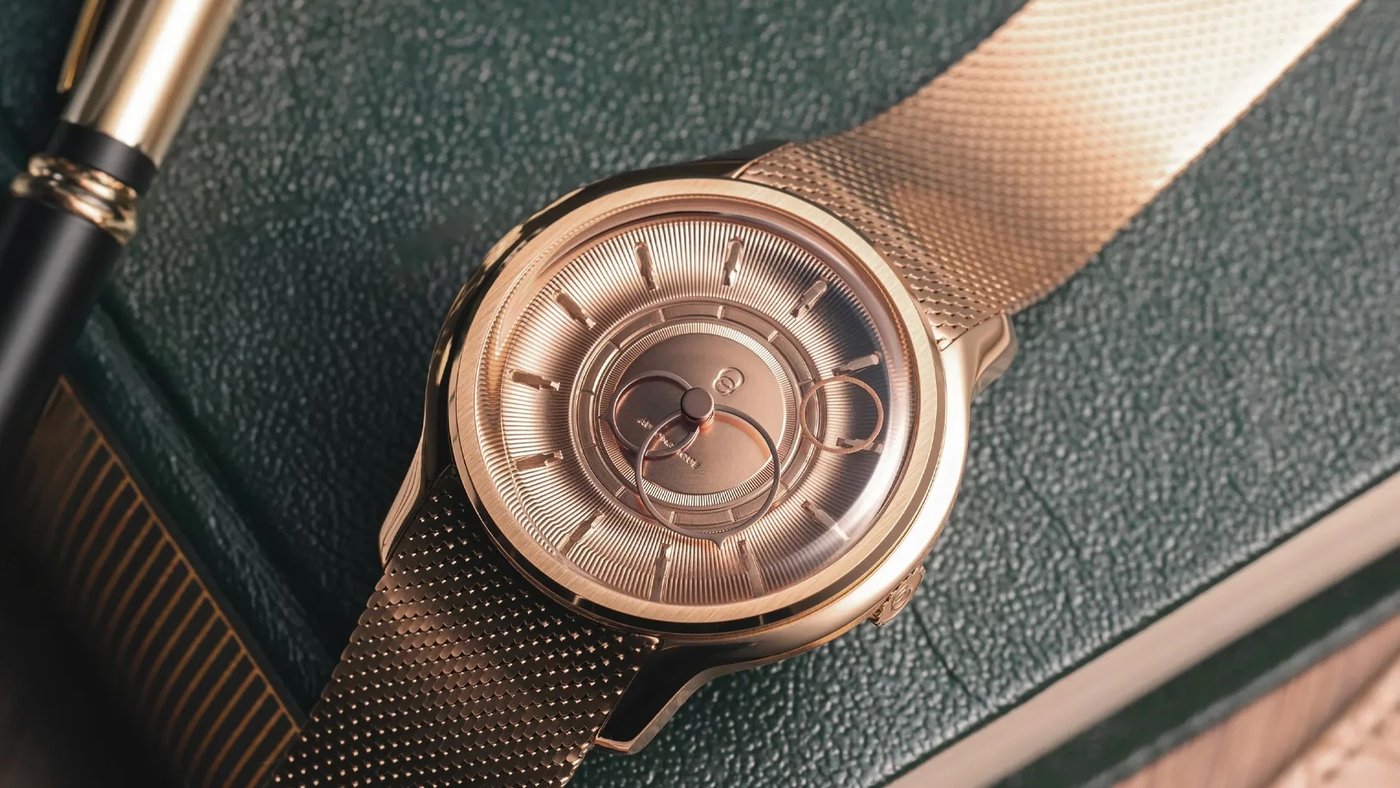
Buying one of the best watches for small wrists should not require translating forum folklore. A 38mm watch can sit beautifully; another 38mm watch can overhang the wrist and look borrowed. The difference is usually not the diameter. It is the span from one lug tip to the other.
This guide ranks small-wrist-friendly references from Cartier, Grand Seiko, Tudor, Omega and NOMOS using the measurements that matter: case diameter, lug-to-lug, case thickness and lug width. The fit standard throughout is a clearly defined small wrist: 6.25 inches in circumference, representing the middle of the 6.0–6.5-inch range.
The point is not to make every watch look inexpensive or discreet. The point is to respect proportion. A watch has value because the case architecture, finishing, movement, dial and wearing experience hold up under attention — not because the spec sheet gives you the largest possible object for the money.
The measurements that actually matter for small wrists
Most watch sizing advice starts with case diameter. That is useful, but incomplete. A round 38mm watch with short, curved lugs may be far easier to wear than a 36mm watch with long, flat lugs. On a small wrist, the decisive question is whether the lugs remain inside the flat usable width of the wrist.
Lug-to-lug
The distance from the outer tip of the upper lug to the outer tip of the lower lug. For a 6.0–6.5-inch wrist, under 47mm is usually safe, 47–48mm is conditional, and anything beyond 48mm requires careful trial.
Case thickness
Thickness determines whether the watch feels elegant or top-heavy. Thinness matters most under a cuff, but it also affects how secure the watch feels on a smaller wrist.
Lug width
Lug width controls strap availability and visual balance. On smaller watches, 18mm and 19mm lugs often preserve refinement; 20mm can work when the case is compact and the lugs turn down.
Case diameter
Diameter still matters, but it should be read after lug-to-lug. It tells you dial presence, not wrist fit. Treat it as the second sizing number, not the first.
The small-wrist rule: start with lug-to-lug. If it is under roughly 47mm, then judge dial size, thickness and bracelet taper. If it is over 48mm, do not buy without seeing it on your wrist or requesting straight-on wrist photography from the seller.
The ranked list with full measurements
These are not the only good small-wrist watches. They are the references that combine serious watchmaking, durable taste and measurable proportion. Measurements are listed in millimeters; thickness includes the crystal and caseback where the maker reports it that way.
| Rank | Reference | Case diameter | Lug-to-lug | Thickness | Lug width | 6.25-inch wrist verdict |
|---|---|---|---|---|---|---|
| 1 | Cartier Tank Must Large WSTA0041 | 33.7 × 25.5 | 33.7 | 6.6 | 19 | Safest proportion in the group; rectangular geometry makes the length feel deliberate rather than undersized. |
| 2 | Grand Seiko SBGW231 | 37.3 | 44.3 | 11.6 | 19 | Excellent dress-watch fit with enough case presence to avoid looking precious. |
| 3 | Omega Seamaster Aqua Terra 38mm 220.10.38.20.03.001 | 38.0 | 45.0 | 12.24 | 19 | The strongest everyday choice: compact enough across the wrist, substantial enough to feel modern. |
| 4 | NOMOS Tangente 35 ref. 101 | 35.0 | 45.0 | 6.2 | 18 | Very thin and elegant, though the long straight lugs make it read larger than the diameter suggests. |
| 5 | Tudor Black Bay 54 M79000N | 37.0 | 46.0 | 11.2 | 20 | The best small-wrist dive-watch fit here, near the upper edge but still controlled. |
1
Cartier Tank Must Large WSTA0041
The Tank is the corrective to the idea that small-wrist watches have to be compromised. Its 33.7 × 25.5mm case is not trying to mimic a sports watch. It is a piece of design with a disciplined rectangle, Roman numerals, blued-steel-style hands and enough negative space to look intentional on a 6.25-inch wrist.
Because the case length is effectively the lug-to-lug measurement, the Tank avoids the most common small-wrist problem: lugs floating past the wrist edge. It is also only 6.6mm thick, which gives it the physical refinement people pretend to see in far bulkier watches.
Buy it if: you want the most proportionally secure choice and you value design permanence over mechanical theater. Check before buying: strap fit and hole placement; a too-long leather strap can make an otherwise perfect watch wear poorly.
Where it makes sense to buy: Cartier boutique or authorized dealer for current production; authenticated pre-owned if you are comfortable verifying case condition and strap wear.
2
Grand Seiko SBGW231
The SBGW231 is the small-wrist dress watch for someone who inspects finishing. At 37.3mm across and 44.3mm lug-to-lug, it has enough dial and case to feel grown-up without spilling across the wrist. The manual-wind movement also keeps the watch emotionally direct: you interact with it, rather than merely own it.
The case thickness of 11.6mm is not ultra-thin, but the proportions are balanced by a restrained dial and curved case profile. The 19mm lug width is awkward for bargain strap bins and excellent for visual proportion.
Buy it if: you care about hand finishing, dial texture and quiet credibility. Check before buying: whether the polished case surfaces show hairlines; Grand Seiko finishing is beautiful, but it records careless handling.
Where it makes sense to buy: Grand Seiko authorized dealer, Grand Seiko boutique, or a reputable pre-owned dealer with clear macro photos of the case flank and lugs.
3
Omega Seamaster Aqua Terra 38mm 220.10.38.20.03.001
The Aqua Terra 38 is the practical answer for a smaller wrist that still wants a serious modern watch. The 38mm diameter sounds ordinary, but the 45.0mm lug-to-lug is the reason it works. It lands below the danger zone while still offering 150 meters of water resistance, a high-grade automatic movement and a bracelet-first personality.
At 12.24mm thick, it has more wrist height than the Cartier or NOMOS, so the bracelet sizing matters. A proper fit should keep the watch centered without needing the clasp overly tight.
Buy it if: you want one watch that can handle a jacket, travel, rain and a weekend bag. Check before buying: the bracelet’s removable-link range and clasp adjustment, especially if your wrist is closer to 6.0 inches than 6.5.
Where it makes sense to buy: Omega boutique or authorized dealer for full warranty; pre-owned platforms can be attractive if the bracelet is complete and the movement history is documented.
4
NOMOS Tangente 35 ref. 101
The Tangente 35 is proof that diameter alone can mislead in both directions. A 35mm case sounds tiny, but the 45.0mm lug-to-lug and long Bauhaus lugs give it more reach than the number implies. On a 6.25-inch wrist it still works, largely because the watch is only 6.2mm thick and the case is visually spare.
The result is not a shrinking-violet dress watch. It is crisp, architectural and unusually precise in personality. The 18mm lug width also makes strap changes straightforward without making the case look over-strapped.
Buy it if: you want restraint with intellectual edge and a manual-wind movement in an impressively thin case. Check before buying: the lug overhang from a straight-on angle; the Tangente’s lugs are the whole sizing story.
Where it makes sense to buy: NOMOS authorized retailer or direct from NOMOS; pre-owned only if the lugs are clean and the strap has not distorted the case fit.
5
Tudor Black Bay 54 M79000N
The Black Bay 54 is the small-wrist dive watch that understands restraint. Its 37mm case diameter and 46.0mm lug-to-lug place it near the upper end of the safe zone, but the watch avoids the slab-sided feeling that makes many modern divers look too assertive on smaller wrists.
The 20mm lug width gives it more strap mass than the dress watches in this guide. That is not a flaw; it is part of its tool-watch language. It simply means bracelet and strap taper matter more here than they do on the Cartier or Grand Seiko.
Buy it if: you want a capable, historically proportioned diver rather than a large modern dive watch reduced only in diameter. Check before buying: whether the bracelet end links sit flush and whether the clasp adjustment lets the watch sit centered without pressure.
Where it makes sense to buy: Tudor authorized dealer for current-production security; established pre-owned dealers if you can inspect bracelet completeness, warranty card and case edges.
How to check fit before you buy
A watch that photographs well in isolation can still fail on the wrist. Before buying, especially online, check fit in this order:
- Measure wrist circumference. Use a soft tape measure where the watch naturally sits. If you are between 6.0 and 6.5 inches, treat lug-to-lug as the primary number.
- Estimate the flat top of your wrist. Small wrists vary. A rounder 6.25-inch wrist may have less usable top surface than a flatter 6.0-inch wrist.
- Compare lug-to-lug before diameter. Under 47mm is the practical comfort zone for many smaller wrists. The 47–48mm band is possible, but should be tested. Over 48mm is a personal-risk purchase.
- Check thickness from the side. A watch can be short enough across the wrist and still feel unstable if it is too tall.
- Account for bracelet geometry. Male end links and stiff first links can add effective length. A bracelet watch may wear longer than the published lug-to-lug number.
What to ask at a boutique
Do not ask only, “What is the case size?” Ask the sales associate to confirm the lug-to-lug measurement, case thickness and lug width. If they cannot provide lug-to-lug, ask to handle the watch on your wrist and view it straight down from above, not angled in a mirror. The mirror angle often flatters watches that are too long.
If you are buying remotely, ask for a straight-on wrist shot on a wrist with a stated circumference, plus a side-profile shot showing case thickness. This is not fussiness. It is the same seriousness you would apply to tailoring a jacket or choosing a fountain pen nib: the detail is the object.
If this purchase is part of a broader plan, our guide to how to build a watch collection is a useful framework for deciding whether this should be your dress watch, everyday watch or diver. For shoppers deciding between modern sport-watch platforms, our Rolex Submariner vs. Omega Seamaster comparison shows how specifications translate into real ownership tradeoffs.
FAQ
What is the best watch size for a 6-inch wrist?
There is no single best diameter, but lug-to-lug under roughly 47mm is the safest starting point. Many 34–38mm watches work well, provided the lugs are short or curved and the case is not excessively thick.
Is 38mm too big for a small wrist?
Not necessarily. The Omega Aqua Terra 38mm works because its lug-to-lug is about 45.0mm. A different 38mm watch with a 49mm lug-to-lug could be too long. Judge the full footprint, not the headline diameter.
Why does lug-to-lug matter more than case diameter?
Lug-to-lug determines whether the watch extends beyond the flat top of the wrist. Diameter describes the width of the case, but the lugs are what create overhang and visual imbalance.
Are rectangular watches better for small wrists?
They can be. A rectangular watch like the Cartier Tank Must has a controlled case length and no long external lugs, so it often looks proportionate on smaller wrists. The tradeoff is that rectangular dimensions cannot be compared directly to round case diameter.
Should I buy on bracelet or strap for a small wrist?
Buy the configuration that fits best after sizing. Leather can be elegant, but strap length and hole placement matter. Bracelets can be excellent if the clasp has enough adjustment and the first links articulate downward rather than flaring out.