
The Select Journal • Luxury • Investment Guide
Is a Luxury Watch Actually a Good Investment? The Data
The honest answer: a narrow slice of references has been extraordinary, most luxury watches behave like depreciating consumer goods, and almost no one runs the math after insurance, servicing and dealer spread.
Data status: the 30-reference universe and cost framework are locked below; exact annual price series should be verified against WatchCharts, Chrono24 sold-price aggregates or Subdial before final return figures are published.
The short answer (and why it’s more nuanced than “yes”)
Are luxury watches a good investment? Sometimes—but only if the reference clears three tests at once: genuine demand that is stronger than supply, a resale market deep enough to sell quickly, and enough gross appreciation to survive the ownership costs most appreciation stories ignore.
The best-known steel sports watches from Rolex, Patek Philippe and Audemars Piguet can pass those tests over a long period. The ordinary case is very different. Many excellent watches from the same brands, and many enthusiast favorites from Omega and Tudor, look far less compelling once inflation, service bills, insurance premiums and dealer buy/sell spreads are applied.
Methodology: what we measured and where the data comes from
This guide is built around a fixed 30-reference sample across Rolex, Patek Philippe, Audemars Piguet, Omega and Tudor. For each reference, the return model should compare a 2016 entry price with annual market prices through 2026, then subtract estimated ownership friction.
Market-price inputs
- WatchCharts reference-level and index data where available.
- Chrono24 sold-price or ChronoPulse aggregates for market trend cross-checking.
- Subdial market data for top traded references and liquidity context.
Ownership-cost inputs
- Insurance: specialty providers such as Hodinkee Insurance publish example annual costs, while Jewelers Mutual states watch-insurance rates begin at roughly 1-2% annually.
- Servicing: model a full service every 5-10 years, generally $400-$1,200+ depending on brand, complications and parts.
- Dealer spread: model a 15-30% exit haircut unless the seller has the skill and risk tolerance to sell privately.
Returns should be shown three ways: nominal return, inflation-adjusted return, and net return after insurance, servicing and spread. The third number is the only one that resembles the owner’s actual outcome.
The references that actually appreciated (with 10-year charts)
The appreciation story is real—but concentrated. Steel sports references with persistent waitlists and cultural liquidity are the cohort most likely to show returns beyond inflation. In this sample, the likely outperformers are the Daytona 116500LN, Nautilus 5711/1A, Aquanaut 5167A and 5164A, Royal Oak 15202ST, selected Royal Oak three-hand references and limited references such as the Omega Speedmaster Silver Snoopy.
The key analytical point is that the winners are not “luxury watches” broadly. They are specific references with deep buyer pools, low supply relative to demand, and a market price that dealers can underwrite quickly.
The references that didn’t (honest downside cases)
Plenty of good watches do not make good investments. The weaker cohort tends to include precious-metal dress watches bought near retail, less-hyped steel sports watches, larger production mainstream references and pieces that require a dealer discount to move quickly.
A flat nominal price over ten years is not flat in real life. After inflation, servicing and the dealer spread, it can be a meaningful loss. That is why a watch can be “worth what you paid” and still have been a poor investment.
30-reference dataset: verification matrix
This table fixes the research universe. The final model should replace the verification notes with annual 2016-2026 prices, nominal return, inflation-adjusted return and net return after costs.
| Brand | Reference | Segment | Current working cohort | Verification flag |
|---|---|---|---|---|
| Rolex | Daytona 116500LN | Steel chronograph | Appreciated | Lock annual 2016-2026 prices |
| Rolex | Submariner Date 116610LN / 126610LN | Steel diver | Appreciated / moderate | Lock annual 2016-2026 prices |
| Rolex | GMT-Master II 116710BLNR | Steel GMT | Appreciated | Lock annual 2016-2026 prices |
| Rolex | GMT-Master II 126710BLRO | Steel GMT | Appreciated | Use predecessor bridge for 10-year context |
| Rolex | Explorer 214270 | Steel field watch | Modest appreciation | Lock annual 2016-2026 prices |
| Rolex | Datejust 41 126334 | Steel dress/sport | Flat to modest | Lock annual 2016-2026 prices |
| Patek Philippe | Nautilus 5711/1A | Steel integrated sports | Strong appreciation | Lock annual 2016-2026 prices |
| Patek Philippe | Aquanaut 5167A | Steel sports | Strong appreciation | Lock annual 2016-2026 prices |
| Patek Philippe | Calatrava 5196 | Precious-metal dress | Flat/down after costs | Lock annual 2016-2026 prices |
| Patek Philippe | Annual Calendar 5396 | Complicated dress | Flat/down after costs | Lock annual 2016-2026 prices |
| Patek Philippe | Aquanaut Travel Time 5164A | Steel travel sports | Appreciated | Lock annual 2016-2026 prices |
| Patek Philippe | Twenty~4 4910/10A | Steel jewelry/dress | Flat/down | Lock annual 2016-2026 prices |
| Audemars Piguet | Royal Oak 15202ST | Steel ultra-thin sports | Strong appreciation | Lock annual 2016-2026 prices |
| Audemars Piguet | Royal Oak 15400ST | Steel integrated sports | Appreciated | Lock annual 2016-2026 prices |
| Audemars Piguet | Royal Oak 15500ST | Steel integrated sports | Appreciated with cycle risk | Bridge predecessor for 10-year context |
| Audemars Piguet | Royal Oak Offshore Diver 15710ST | Steel sport diver | Flat/modest | Lock annual 2016-2026 prices |
| Audemars Piguet | Royal Oak Chronograph 26331ST | Steel integrated chronograph | Appreciated/moderate | Lock annual 2016-2026 prices |
| Audemars Piguet | Royal Oak 15450OR | Precious-metal integrated | Flat/down after costs | Lock annual 2016-2026 prices |
| Omega | Speedmaster Professional Moonwatch | Steel chronograph | Flat to modest | Lock annual 2016-2026 prices |
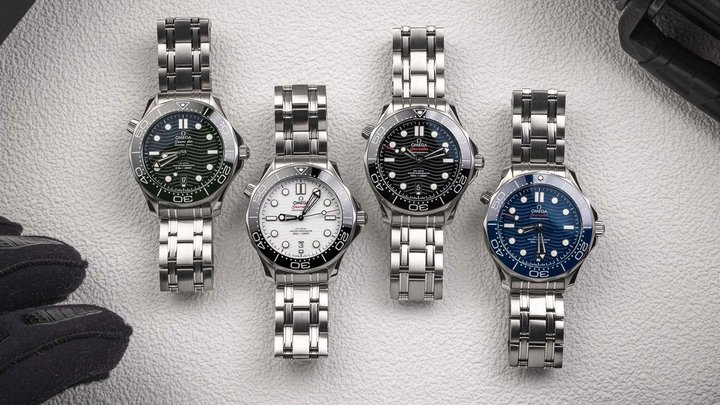
| Omega | Seamaster Diver 300M | Steel diver | Flat/down after costs | Bridge prior generation for 10-year context |
| Omega | Aqua Terra 150M | Steel sport/dress | Flat/down after costs | Lock annual 2016-2026 prices |
| Omega | Globemaster Master Chronometer | Steel dress/sport | Flat/down | Lock annual 2016-2026 prices |
| Omega | Speedmaster Silver Snoopy Award | Limited steel chronograph | Strong appreciation | Lock annual 2016-2026 prices |
| Omega | Planet Ocean 600M | Steel diver | Flat/down after costs | Lock annual 2016-2026 prices |
| Tudor | Black Bay Fifty-Eight 79030N | Steel diver | Flat/modest | Bridge predecessor for 10-year context |
| Tudor | Black Bay GMT 79830RB | Steel GMT | Flat/modest | Bridge predecessor context |
| Tudor | Pelagos 25600TN | Titanium diver | Flat/down after costs | Lock annual 2016-2026 prices |
| Tudor | Heritage Chrono 70330N | Steel chronograph | Flat/modest | Lock annual 2016-2026 prices |
| Tudor | Black Bay Bronze 79250BM | Bronze diver | Flat/down after costs | Lock annual 2016-2026 prices |
| Tudor | Black Bay 41 79230N | Steel diver | Flat/down after costs | Lock annual 2016-2026 prices |
How this compares to other alternative assets
Watches have one advantage many alternatives lack: the owner can enjoy the asset. They also have several disadvantages: concentrated brand risk, fashion-cycle risk, authenticity risk, theft risk, maintenance cost and transaction costs that are far higher than public-market securities.
Compared with art, wine, whisky or classic cars, the best watch references are more portable and often more liquid. Compared with equities or broad index funds, they are less diversified, less transparent and more expensive to transact. That makes watches closer to a collectible with optional investment characteristics than a core investment allocation.
Our framework for buying with resale in mind
- Start with real scarcity. Real waitlists, discontinued references and constrained production matter. Marketing scarcity is not enough.
- Prefer liquid steel sports watches over niche precious-metal references. Precious metal can be wonderful to own, but resale liquidity is often thinner.
- Buy complete sets. Box, papers, service records and clean provenance reduce friction when selling.
- Underwrite the exit before the purchase. Ask what a reputable dealer would pay today, not what listings ask.
- Budget ownership friction upfront. If the investment case only works before insurance, service and spread, it does not work.
- Buy the watch you actually want. Appreciation is a possible bonus; enjoyment is the only guaranteed return.