ThePremium Watches
The Best Chronographs, From Speedmaster to Daytona
The best chronograph watches are not simply the most famous ones. They are the pieces whose pushers feel convincing, whose movements make mechanical sense, and whose cases, bracelets and dials still reward attention after years of ownership.
Chronograph shopping should not collapse into two names
Chronograph shopping tends to collapse into Speedmaster or Daytona, which skips the actual mechanical differences that determine how a watch feels to use daily, how confidently it resets, and how gracefully it ages. Fame matters in watches, but it is a weak substitute for the small tactile proofs that make a chronograph worth owning.
For this guide, we rank major modern and near-modern references by movement architecture, pusher feel, real-world legibility, case wear, bracelet behavior and long-term service risk. The perspective is deliberately not launch-week enthusiasm. A chronograph has to remain satisfying after desk marks, bracelet polish, a few strap changes, one or two timing checks and enough pusher actuations to reveal whether the mechanism feels expensive or merely looks expensive.
If you are building from scratch, start with the broader watches hub, then compare this guide with our Rolex Submariner vs. Omega Seamaster analysis and our framework for how to build a watch collection. A chronograph is usually not the first watch a practical collector needs, but it is often the first one that reveals whether he cares about mechanical feel.
What separates a good chronograph from a great one
A good chronograph times an interval. A great chronograph makes timing an interval feel inevitable. The distinction lives in four places: the control system, the clutch, the pusher geometry and the dial execution.
Movement architecture
The central choice is usually column-wheel versus cam-actuated. A column wheel coordinates start, stop and reset through a notched wheel that gives the levers clean, defined positions. A cam-actuated system uses shaped cams and levers to accomplish the same functional work, usually at lower production cost and often with greater tolerance for industrial-scale serviceability.
Clutch design
A vertical clutch generally starts the chronograph seconds hand more smoothly and can tolerate being left running more comfortably. A horizontal or lateral clutch is visually charming through an open case-back and mechanically traditional, but it can show a small jump at engagement if not perfectly adjusted.
Pusher feel
Luxury is felt under the thumb before it is admired across a table. The start pusher should have resistance without sponginess, travel without vagueness, and a clean break at actuation. The reset pusher should snap the chronograph seconds hand precisely back to zero without bounce or hesitation.
Legibility after novelty fades
Chronographs are easy to over-design. The watches that age well usually have strong contrast, disciplined subdial hierarchy and markers that remain readable in evening light, not just under boutique lighting.
The short version: a column-wheel chronograph generally feels more precise under the thumb and costs meaningfully more to produce, but that does not automatically make it the better ownership choice. The Omega Speedmaster Professional remains one of the great chronographs precisely because its cam-controlled architecture is honest, robust and coherent with the watch’s purpose. Conversely, the Rolex Daytona earns its status partly because its column-wheel and vertical-clutch system feels integrated rather than ornamental.
The ranked list
These rankings favor enduring ownership over launch heat. Prices, availability and dealer relationships will change; pusher feel, dial logic and service realities change much more slowly.
| Rank | Reference family | Typical architecture | Pusher feel | Long-term ownership note |
|---|---|---|---|---|
| 1 | Rolex Cosmograph Daytona | Automatic, column-wheel, vertical clutch; modern 4130/4131 family | Short, secure, highly damped, with a polished reset action | Excellent bracelet and clasp longevity; polished center links show hairlines quickly; service access and purchase access remain the real friction. |
| 2 | Omega Speedmaster Professional Moonwatch | Manual-wind, cam/shuttle-operated chronograph; current 3861 family | Firm, mechanical, slightly more agricultural than luxurious in the best way | Hesalite versions collect honest scratches and can be polished; bracelets have improved dramatically; water-resistance habits matter more than owners admit. |
| 3 | Zenith Chronomaster / El Primero | Automatic, column-wheel, high-frequency 5 Hz El Primero architecture | Crisp, lively, technically expressive | Movement charisma remains the draw; high-frequency servicing should be budgeted seriously; overlapping subdial layouts are not equally legible for every wrist. |
| 4 | Breitling Navitimer or Premier B01 | Automatic, column-wheel, vertical clutch; manufacture B01 family | Positive and smooth, with more tool-watch mass than jewelry delicacy | B01 is one of the stronger modern chronograph value cases; polished cases mark; Navitimer bezels and crystals reward careful wear. |
| 5 | TAG Heuer Carrera Chronograph | Modern TH20 family: automatic column-wheel/vertical-clutch architecture on key references | Cleaner and more mature than older TAG stereotypes suggest | Recent Carreras are better long-term objects than their brand baggage implies; check case thickness, service history and dial execution reference by reference. |
1
Rolex Cosmograph Daytona: the most complete ownership object
The Daytona is not the most romantic chronograph, and it is certainly not the easiest one to buy well. It is, however, the most complete long-term ownership object in this group. The modern in-house Daytona movement family pairs a column wheel with a vertical clutch, giving it the combination collectors want: defined pusher feel, controlled start-up, efficient automatic winding and a design that tolerates regular use.
Under the thumb, the Daytona feels expensive in a way that is difficult to fake. The pushers do not have the hand-wound snap of a Speedmaster or the exposed-mechanism charm of an El Primero. Instead, they have Rolex’s characteristic hydraulic certainty: short travel, clear resistance and a reset action that communicates precision rather than drama.
Long-term, the Daytona’s ownership strengths are the case finishing, bracelet engineering, clasp quality and market depth. The weakness is also obvious: polished center links collect hairlines quickly, and the watch’s cultural volume can drown out its mechanical quality. On multi-year examples, the watch tends to look either carefully worn or conspicuously polished. Buy the former. A Daytona with honest surface wear is usually preferable to one with softened lug geometry and a story about “a light polish.”
Best for: the collector who wants a chronograph that can be worn hard, serviced predictably and sold easily, without sacrificing mechanical credibility.
2
Omega Speedmaster Professional: the chronograph with the strongest argument for ownership
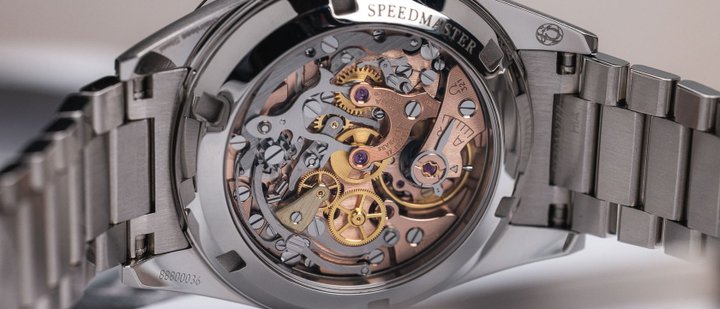
The Speedmaster is the watch that makes the cleanest case for buying a chronograph because the entire object is organized around the complication. The tachymeter bezel, tri-compax dial, pump pushers, manual winding ritual and case profile all reinforce the same purpose. It does not feel like a three-hand watch with extra parts. It feels like a chronograph by birth.
The current Moonwatch with Omega’s 3861 movement is not a column-wheel flex. It is a cam/shuttle-operated manual chronograph, and that matters. The pusher feel is firmer and more mechanical than the Daytona’s. Some will read that as less refined. Others will correctly read it as more characterful. It has a tactile honesty that suits the watch.
Long-term Speedmaster ownership has its own rhythm. Hesalite crystals mark, but the marks are part of the charm and can often be polished. Sapphire versions resist scratches but lose a little warmth. The current bracelet is a major improvement over many earlier Omega bracelets, but vintage and older modern examples still need close inspection for stretch, clasp wear and over-polishing. The most common ownership mistake is treating the Speedmaster as more water-ready than it is. It is a daily watch, but not a careless summer watch.
Best for: the serious first chronograph buyer, especially one who values manual interaction and design coherence over scarcity performance.
3
Zenith El Primero: the movement enthusiast’s choice
The Zenith El Primero is the watch you buy when the movement is not a hidden justification but the actual point. Its high-frequency architecture gives the chronograph a technical identity that remains compelling decades after the original El Primero arrived. Modern Chronomaster references using the El Primero 3600 family make the argument with particular clarity: column-wheel operation, a 5 Hz beat rate and a chronograph display capable of expressing tenths of a second.
The pusher feel is crisp and animated. It does not have the sealed-bank-vault quality of the Daytona, nor the toolroom simplicity of the Speedmaster. It feels like a fine mechanism doing visible work. For mechanically literate buyers, that is the charm.
Long-term, the El Primero rewards owners who understand that high-frequency movements are not casual ownership propositions. Service should be budgeted properly, and condition matters. Dial legibility also varies more than brand mythology suggests. Some overlapping subdial layouts are beautiful in photographs and mildly compromised in actual timing use. The best El Primero ownership comes from choosing the reference whose dial you can read instantly, not the one with the most historical talking points.
Best for: the owner who wants his chronograph to be a movement conversation, not merely a luxury signal.
4
Breitling B01: the underrated manufacture chronograph
Breitling’s B01 deserves a more serious place in modern chronograph conversations. The architecture is what buyers say they want: in-house manufacture movement, column wheel, vertical clutch and a long power reserve. In Premier form it can be handsome and restrained; in Navitimer form it carries the aviation-instrument density that made Breitling famous.
Pusher feel on B01 references is positive and smooth, though the overall experience is heavier and more instrument-like than a Daytona. That is not a flaw. Breitling chronographs have always made more sense when treated as purposeful equipment than as delicate dress-adjacent objects.
Multi-year examples show the usual Breitling split. The movement can be a strength, while the case and bezel condition determine whether the watch still feels expensive. Polished surfaces mark. Navitimer bezels, crystals and slide-rule scales reward careful handling. If buying pre-owned, prioritize unpolished geometry, clean chronograph reset, full service documentation and a bracelet or strap configuration you genuinely want to wear rather than resell.
Best for: the buyer who wants manufacture chronograph architecture without making the ownership experience entirely about Rolex availability.
5
TAG Heuer Carrera: the comeback candidate
The Carrera has carried too much brand-history noise for too long. Some buyers still judge TAG Heuer by less convincing eras, while the better modern Carrera chronographs deserve a more disciplined look. The strongest current references using the TH20 movement family bring the architecture into serious territory with column-wheel and vertical-clutch execution.
The pusher feel is cleaner than many skeptics expect: defined, modern and reasonably refined. It may not have the deep tactile authority of the Daytona or the historic purity of the Speedmaster, but it no longer needs an apology. The best Carreras now stand on design, wearability and a legitimate movement story.
Long-term ownership is reference-sensitive. Some cases wear thick, some dials are far more legible than others, and older examples can vary widely in service history. The better play is not to buy the cheapest Carrera chronograph available. Buy the one whose size, movement, dial contrast and case condition make sense as a five-year object. That is where the value is.
Best for: the buyer who wants a serious modern chronograph with motorsport heritage, but who is willing to choose by reference rather than logo memory.
Manual vs. automatic chronograph movements: what it actually changes
The manual-versus-automatic question is often framed as romance versus convenience. That is directionally true, but incomplete.
A manual chronograph, like the Speedmaster Professional, makes the owner participate. Winding is not a chore if the crown, resistance and daily ritual suit the watch. Manual architecture can also allow a thinner case and a more direct connection to the mechanism. The trade-off is practical: if you rotate watches frequently, you will reset and wind it often. Some owners enjoy that. Others eventually stop wearing the watch.
An automatic chronograph, like the Daytona, El Primero, B01 or modern Carrera, better suits daily wear and rotation. It is more convenient, usually thicker, and often more expensive to service. The best automatic chronographs justify that complexity with vertical-clutch smoothness, long power reserve or high-frequency technical interest. The mediocre ones simply add height.
The more important question is whether the movement architecture supports the watch’s identity. A cam-operated manual Speedmaster is not inferior because it lacks a column wheel. It is coherent. A Daytona without a vertical clutch would feel less complete because the watch promises effortless modern precision. An El Primero that hides its frequency advantage behind a confused dial misses the point. Architecture is not a spec-sheet trophy; it is the reason the watch feels the way it does.
Buying notes for long-term owners
- Test all three commands. Start, stop and reset the chronograph multiple times. Look for seconds-hand jump at engagement, reset misalignment and inconsistent pusher resistance.
- Inspect the case before the movement. A strong movement inside a rounded, over-polished case is not a strong watch. Lug shape, bezel edge and bracelet condition tell the ownership story.
- Budget service honestly. Chronographs are more complex than three-hand watches. Column wheels, vertical clutches and high-frequency escapements all deserve proper service planning.
- Buy new through authorized channels when relationship, warranty and allocation matter. Buy pre-owned when condition, documentation and price transparency matter more than being first owner.
- Do not buy the story instead of the watch. Moon missions, racing heritage and manufacture language are useful context. They are not substitutes for dial legibility and pusher feel.
Verdict: the best chronograph depends on what you respect
The Daytona is the best complete luxury chronograph. The Speedmaster is the best chronograph to own as a chronograph. The El Primero is the best movement enthusiast’s choice. The Breitling B01 is the strongest under-discussed manufacture alternative. The Carrera is the modern value candidate that deserves to be judged again.
If the goal is status alone, the answer is easy and not very interesting. If the goal is long-term ownership of a mechanical object whose value comes from what it is, not merely what it costs, spend less time asking which name impresses the room and more time pressing the pushers. The thumb usually knows before the ego does.
FAQ
What is the best chronograph watch overall?
For a complete luxury ownership experience, the Rolex Daytona is the strongest overall chronograph. For a purer chronograph-first ownership experience, the Omega Speedmaster Professional remains the benchmark.
Is a column-wheel chronograph always better than a cam-actuated chronograph?
No. A column wheel often gives a more refined and precise pusher feel, but a well-executed cam-actuated chronograph can be robust, satisfying and easier to produce or service. The Speedmaster is the obvious proof that architecture has to be judged in context.
Why does pusher feel matter on a chronograph?
Pusher feel is the owner’s direct connection to the mechanism. Clean resistance, defined travel and precise reset make the chronograph feel mechanically convincing. A vague or spongy pusher can make an expensive watch feel less serious.
Are automatic chronographs better for daily wear?
Usually, yes. Automatic chronographs are more convenient if worn regularly, especially when paired with a vertical clutch and strong power reserve. Manual chronographs can be more engaging and sometimes slimmer, but they demand more owner participation.
What should I check before buying a pre-owned chronograph?
Check pusher consistency, chronograph seconds-hand alignment, reset precision, service history, case polishing, bracelet stretch, crystal condition and dial legibility. For high-frequency or manufacture movements, service documentation matters more than a small discount.