ThePremium.com / Watches
How to Buy a Pre-Owned Rolex Without Getting Burned
Most Rolex transactions now happen outside the authorized-dealer case. That can be perfectly rational. It can also be expensive, emotional and unforgiving. This manual is built to protect the watch and the money.
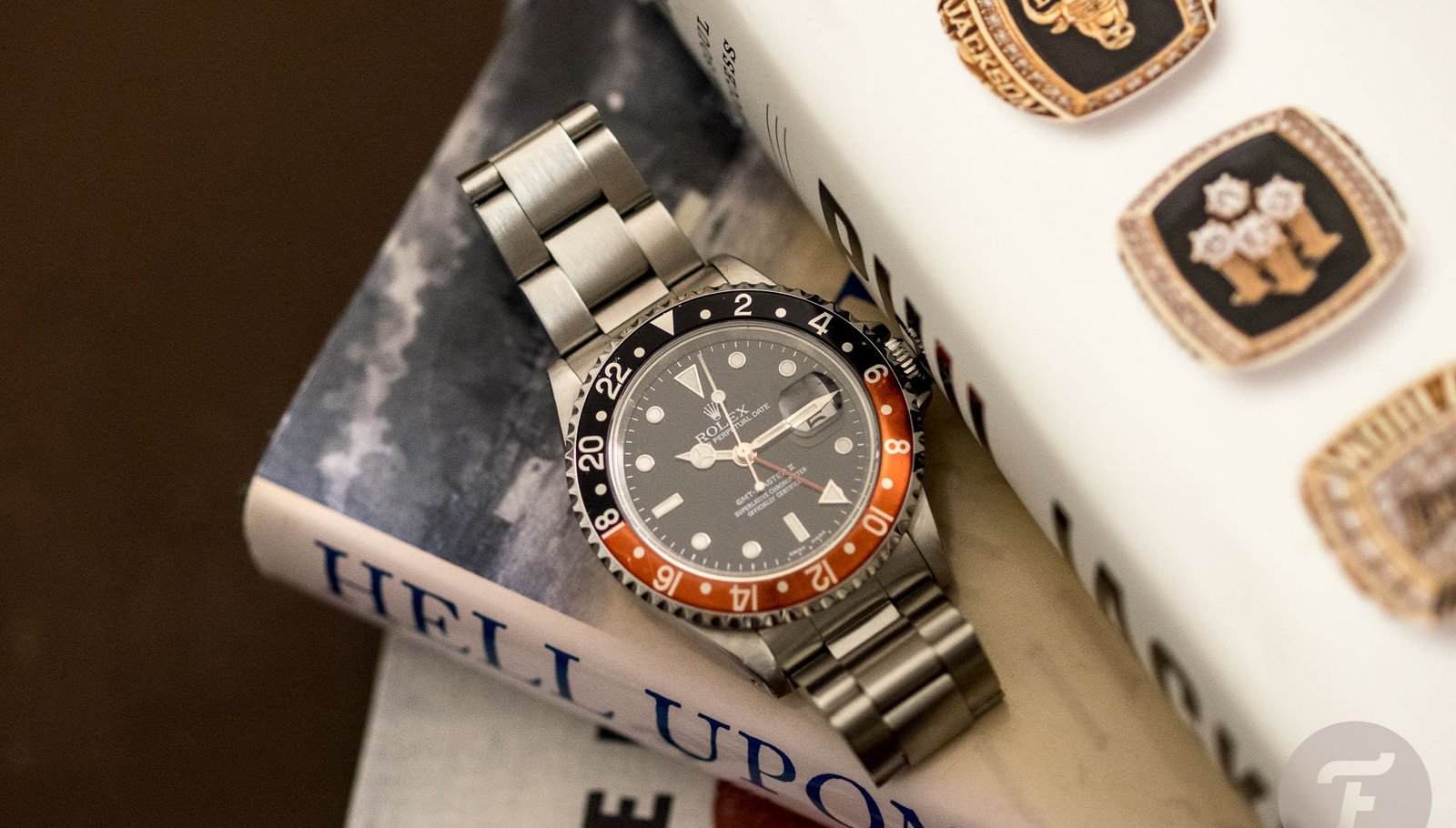
Buying a pre-owned Rolex is not merely a hunt for a lower price. It is a process of verifying reference, condition, originality, seller authority and payment safety before a five-figure object changes hands. If you already know the model family you want, start with the broader Rolex watch guide; if you are trying to decide whether the money belongs in a watch at all, read Is a Luxury Watch Actually a Good Investment? before you wire anything.
This guide is intentionally procedural. It does not ask you to “buy the seller” and stop thinking. It tells you what to request, how to inspect it, when to bring in a watchmaker, and which transaction structure keeps you from becoming the easiest mark in the room.
Why the grey market is where most Rolex sales happen now
The authorized-dealer route is simple in theory: place interest, wait, buy at retail, leave with warranty card and peace of mind. In practice, popular steel references often reach the enthusiast through the secondary market first. That includes marketplace dealers, established pre-owned specialists, trade groups, private collectors and Rolex Certified Pre-Owned retailers.
The grey market exists because availability and allocation do not match demand. A Submariner, GMT-Master II or Daytona may trade above retail because the buyer is paying for immediate access, a specific production year, a dial configuration or a full-set example with condition already visible. Older references trade there because an authorized dealer is no longer a source at all.
That does not make the grey market inherently unsafe. It means the buyer must replace the brand boutique’s chain of custody with evidence: reference documentation, macro inspection, service records, seller history, written return terms and a payment rail that gives you leverage until the watch is verified.
Authentication checklist: what to check and how (with macro photography)
Modern counterfeits are good enough that weight, hand sweep, bezel click and “it feels right” are not a complete authentication system. Treat authentication as a sequence of evidence checks. For any serious purchase, ask the seller for fresh macro photographs shot in natural light or on a light table, plus a short handling video. If the value is meaningful to you, have the watch opened and inspected by an independent Rolex-experienced watchmaker before final acceptance.
The macro photograph set to request
- Dial, hands and applied markers straight-on, not at an angle.
- Coronet at 12 o’clock and, when applicable, the laser-etched crown in the crystal near 6 o’clock.
- Rehaut engraving around the inner bezel, including the serial area and crown alignment.
- Date window and Cyclops from straight-on and shallow side angles.
- Bracelet clasp, end links, SEL fit, reference stampings and removable-link screws.
- Case flanks, lugs, crown guards, bezel teeth and caseback exterior.
- Movement photographs only when opened by a qualified watchmaker; do not let a private seller casually open the watch to “prove” it.
| Detail | What authentic examples usually show | Counterfeit warning signs | How to verify |
|---|---|---|---|
| Dial printing and coronet | Clean edges, consistent ink height, correct spacing, crisp coronet shape and model-specific text placement. | Fuzzy type, uneven lume plots, wrong coronet proportions, inconsistent minute track spacing or dial text that looks slightly too heavy. | Compare against same-reference, same-era examples. Rolex dial variation exists, so match the exact reference and production period. |
| Rehaut engraving | Sharp, evenly spaced “ROLEX” engraving around the rehaut on models that have it, with the coronet aligned at 12 o’clock and serial placement appropriate to the period. | Engraving that is shallow, irregular, poorly aligned, over-bright, or matched with papers that do not reflect the serial range. | Request macro shots around the full inner ring. Check that the serial number on the rehaut matches the warranty card and sales documents. |
| Laser-etched crown | A very subtle crown micro-etching in the crystal near 6 o’clock on many modern Rolex watches, normally difficult to see without magnification and angled light. | A crown that is too obvious to the naked eye, crudely shaped, off-position, or absent on a configuration where it should be present. | Use 10x magnification and oblique light. Do not rely on this alone; replacement crystals and model-year differences complicate the check. |
| Cyclops and date | Strong date magnification, clean date-wheel printing, centered date aperture and model-correct font behavior. | Weak magnification, date sitting high or low, distorted cyclops shape, incorrect open numerals or off-center placement. | Photograph straight-on. A claimed 2.5x Cyclops should visibly enlarge the date, but the final judgment should be made against the exact reference. |
| Bracelet and clasp stampings | Correct bracelet reference, clasp code or modern clasp construction, precise coronet, clean edges and tight-but-natural tolerances. | Soft stampings, wrong bracelet reference, rough screw heads, mismatched end links, sharp unfinished edges or excessive stretch inconsistent with claimed age. | Check bracelet code against the watch reference and production era. Photograph both end links and the clasp interior. |
| Case geometry | Lugs, bevels, crown guards and case thickness consistent with reference and polishing history. | Over-polished lugs, rounded crown guards, uneven lug width, incorrect caseback engraving or fake “special edition” engraving. | Ask for side-profile and lug macro shots. Compare case dimensions and lug shape with documented same-reference examples. |
| Movement | Correct Rolex caliber, finishing, rotor, screw color and engravings for the reference and production period. | Generic clone movement, decorative plates, wrong balance bridge, wrong rotor engraving or movement that does not match the claimed reference. | Have an independent watchmaker inspect it before escrow release or during the return window. Movement authentication is not optional on high-value private deals. |
A watch can fail without being fake. It may be genuine but polished hard, fitted with a service dial, missing original bracelet, holding moisture, or assembled from period-correct parts that never left Geneva together. Your job is to separate authenticity from originality from condition. They are related, but they are not the same.
Vetting a dealer or private seller
A good seller makes verification easier. A bad seller makes urgency the product. Before you negotiate price, verify the person or business standing behind the watch.
Dealer checklist
- Registered business name, physical address and reachable phone number.
- Long operating history under the same name, not a recently renamed storefront.
- Written authenticity guarantee and written return policy.
- Clear policy on aftermarket parts, polishing, service dials and replacement bracelets.
- Independent reviews across more than one platform, with responses to disputes.
- Willingness to provide fresh photographs, video and invoice terms before payment.
- Ability to explain reference, year, condition, service history and price without vague theatre.
Private seller checklist
- Real identity that matches payment, shipping and platform records.
- Full box and papers when claimed, with warranty card serial matching the watch.
- Service receipts, purchase invoice or documented ownership history.
- Video call showing the watch in hand, current date and functions operating.
- Serial checked against available stolen-watch databases and community reports.
- Agreement to use escrow or meet at a watchmaker, bank or trusted dealer for inspection.
- No resistance to reasonable due diligence on a five-figure object.
Established pre-owned platforms such as Bob’s Watches, Crown & Caliber and Chrono24 can reduce counterparty risk, but they do not remove the need to verify reference, condition and return terms. Rolex’s own Certified Pre-Owned programme is another route when available through an authorized participating retailer, usually with a premium attached.
When comparing alternatives, a lower-stakes brand comparison such as Tudor vs Rolex can be useful, but it should not distract you from the core Rolex question: are you buying the exact watch represented, from a seller who can be held accountable, at a price the market can justify?
Escrow and payment safety
For private sales above a few thousand dollars, do not wire money directly to a stranger because the photos look convincing. Use a structure that gives you time to inspect the watch and preserves a documented transaction trail.
- Agree the written terms. Identify the exact reference, serial treatment, accessories, condition claims, inspection window, return trigger and who pays insured shipping.
- Open the escrow transaction yourself. Use the platform’s verified domain and never follow a payment link sent in a messaging thread without independently confirming it.
- Fund escrow, not the seller. The seller should ship only after escrow confirms funds are secured.
- Ship insured and tracked. Require adult signature, declared value, tamper-resistant packaging and full transit documentation.
- Inspect immediately. Photograph the package opening, verify serial and accessories, test functions and have a watchmaker inspect the movement before the acceptance window closes.
- Release funds only after verification. If the watch is not as represented, raise the dispute before the deadline and keep every photograph, message and invoice.
Two practical options are Escrow.com for luxury watch transactions and Chrono24’s escrow-backed buyer protection when the listing and seller qualify. Escrow.com describes a five-step process in which the buyer deposits payment, the seller ships after funds are secured, the buyer inspects, and funds are released after acceptance. Platform-specific protections vary, so read the actual terms on the transaction page before relying on them.
Current market pricing by reference and condition
Market price is not the same thing as asking price. Use sold data, current listings and condition adjustments together. The table below uses WatchCharts market snapshots surfaced on August 4–5, 2026 and current marketplace signals where available. Treat it as a negotiation frame, not a substitute for checking live pricing on the day you buy.
| Reference | Market snapshot | Full set / excellent | Watch only / worn | Buyer note |
|---|---|---|---|---|
| Submariner Date 126610LN | $13,716 WatchCharts market price, Aug. 5, 2026 | Roughly $13,700–$14,900 if sharp, complete and recent. | Roughly $12,700–$13,500 depending on wear, service and bracelet condition. | High liquidity. Be suspicious of “new/unworn” claims without matching card date and dealer invoice. |
| Submariner 16610 | $9,296 WatchCharts pre-owned estimate, Aug. 4, 2026 | Roughly $9,300–$10,500 for clean examples with box/papers. | Roughly $8,500–$9,300; WatchCharts indicated about -10.7% without box/papers. | Condition and originality matter more than year. Check bracelet stretch and polishing closely. |
| GMT-Master II 126710BLRO | $21,719 WatchCharts pre-owned estimate, Aug. 5, 2026 | Roughly $21,700–$23,500 for complete examples in excellent condition. | Roughly $20,500–$21,700; WatchCharts indicated about -5.3% without box/papers. | “Pepsi” demand makes fake scarcity stories common. Verify bracelet type, card date and bezel condition. |
| Daytona 116500LN | $27,410 WatchCharts pre-owned estimate for 116500, Aug. 5, 2026; $29,249 for 116500LN-0001 variation, Aug. 4, 2026 | Roughly $29,000–$34,500 for desirable dial/condition combinations. | Roughly $27,000–$29,000; WatchCharts indicated about -3.5% without box/papers on the 116500LN-0001 variation. | High-value target for sophisticated counterfeits. Require movement inspection before funds release. |
| Explorer 124270 | $7,939 WatchCharts pre-owned estimate, Aug. 4, 2026 | Roughly $7,900–$9,400 for clean complete examples. | Roughly $7,500–$7,900; WatchCharts indicated about -5.3% without box/papers. | Less flashy, still often counterfeited. Excellent first Rolex if the case remains crisp. |
| Datejust 36 126234 | $12,488 WatchCharts pre-owned estimate, Aug. 4, 2026 | Roughly $12,500–$13,900, with dial configuration driving variation. | Roughly $11,900–$12,500; WatchCharts indicated about -4.4% without box/papers. | Dial, bracelet and bezel combination can move the number materially. Verify configuration against papers. |
If a seller is 15–25% below the current market with no coherent reason, assume you are missing information. Sometimes the reason is harmless: fast sale, scratches, missing card, over-polishing, private-seller anxiety. Sometimes it is a stolen serial, counterfeit watch, undisclosed aftermarket parts or a transaction designed to vanish the moment funds leave your account.
Red flags that mean walk away
- The seller refuses a video call, current-date photo or in-person inspection.
- The serial number on the warranty card, rehaut or paperwork does not match.
- The seller will show only partial serials but also refuses independent verification.
- The price is meaningfully below market and the explanation is urgency, travel, divorce, tax trouble or “I have another buyer waiting.”
- The watch is described as “unpolished” while the lugs, crown guards or bezel edges look soft.
- The listing avoids the bracelet, clasp, end links, caseback or rehaut in photographs.
- The seller insists on wire, crypto, friends-and-family payment or a cloned escrow site.
- The return policy begins after delivery but expires before a realistic watchmaker inspection can happen.
- The papers are present but suspiciously clean, generic, mismatched or inconsistent with the claimed sale country and date.
- You feel rushed. The right Rolex reference will exist again. Your money may not.
The best pre-owned Rolex purchases feel almost boring by the end: the reference checks out, the photographs match, the seller behaves like an adult, the price sits within a defensible range and the payment structure gives you inspection leverage. If any one of those pillars is missing, stop. Serious objects deserve serious process.