The Select Journal · Watches
Tudor vs Rolex: What You Actually Give Up
The honest version of Tudor vs Rolex is not “Tudor is a great value alternative.” It is a list of what Rolex’s premium buys in the metal, what Tudor now matches, and where the resale market still refuses to treat them as equals.
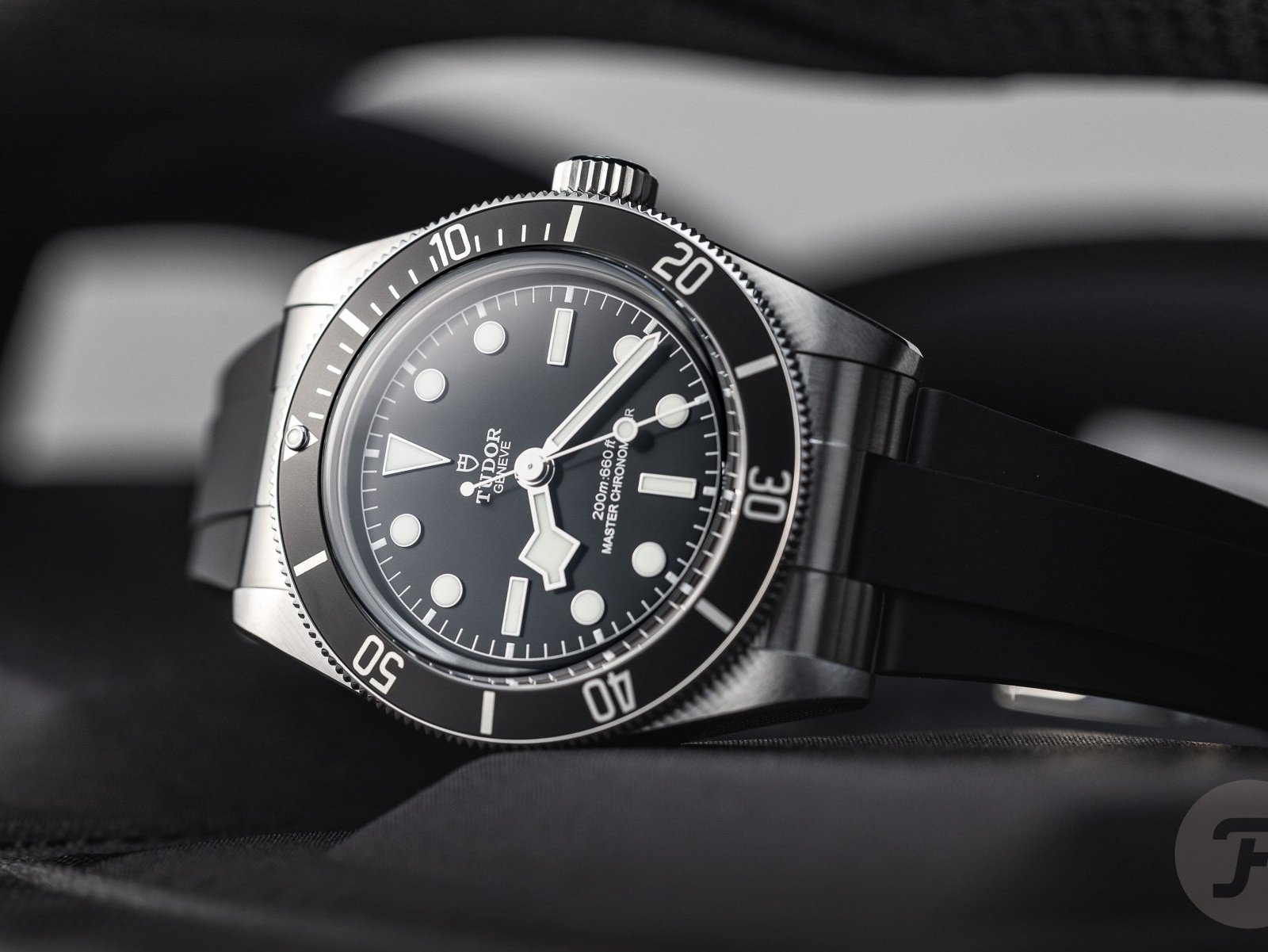
The comparison at a glance
Rolex still occupies the higher tier. Pretending otherwise is sentimentality dressed up as value analysis. The better question is whether the higher tier is buying something you can actually feel, measure or recover at resale.
On current steel sports watches, the answer splits cleanly. Rolex gives you a more liquid asset, tighter whole-watch chronometer claims, generally finer movement architecture, broader collector demand and a clasp system that still feels like the industry reference. Tudor gives you much of the daily competence: robust manufacture movements, serious water resistance, METAS certification on newer references, a bracelet that no longer feels like the “younger sibling” concession, and enough visual restraint to be worn hard without turning every lunch into a valuation conversation.
| Category | Rolex advantage | Tudor reality | Our call |
|---|---|---|---|
| Chronometry | Superlative Chronometer rating is commonly cited at -2/+2 seconds per day after casing. | METAS-certified Tudor Black Bay references target 0/+5 seconds per day as complete watches. | Rolex wins on stated tolerance; Tudor is close enough that accuracy alone does not explain the price gap. |
| Finishing | Cleaner movement architecture, sharper transitions and more refined case/bracelet detailing under magnification. | Tool-watch finishing is honest, industrial and improved, but less nuanced under a loupe. | Rolex premium is justified if finishing matters to you beyond the dial-side impression. |
| Bracelet and clasp | Oyster bracelet and Glidelock/EasyLink systems remain extremely polished in feel. | Current Black Bay bracelets, especially with T-fit, now rival entry Rolex bracelets in practical use. | Rolex still feels more expensive; Tudor is no longer meaningfully compromised for most wrists. |
| Resale | Submariner-class watches remain among the most liquid luxury watches in the world. | Black Bay models are easy to sell, but usually with a larger discount to retail. | Rolex wins decisively. This is the most financially defensible part of the premium. |
Chronometry: measured results
The lazy argument is that Rolex is “more accurate” and Tudor is “good enough.” The measured argument is narrower. Rolex’s Superlative Chronometer standard is typically communicated as -2/+2 seconds per day for the fully assembled watch. Tudor’s newer Master Chronometer Black Bay references, certified by METAS, are tested as complete watches to a 0/+5 seconds-per-day range, with added magnetic-resistance requirements.
That is a real Rolex edge, but it is not a three-times-the-price edge. On a timegrapher, a healthy Tudor Black Bay with a modern manufacture movement and a healthy Rolex Submariner-class movement should both sit inside a range that most owners will not correct more than occasionally. A Rolex 3230 or 3235 that reads +1 second per day is excellent. A METAS Tudor Black Bay reading +2 or +3 seconds per day is also excellent. The ownership experience is not transformed by that difference.
Commonly cited Superlative Chronometer tolerance after casing for modern Rolex movements such as 3230 and 3235.
METAS Master Chronometer daily variation target for current certified Tudor references.
The Rolex spec is tighter, but both are within serious daily-wear mechanical-watch territory.
The caveat: one timegrapher snapshot is not a verdict on a brand. Lift angle, mainspring state, service history, magnetism, position and temperature matter. The fair comparison is identical state of wind, identical positions and a complete-watch standard. Under that standard, Rolex wins on paper. Tudor loses less than most buyers assume.
Finishing under macro photography
This is where Rolex’s premium starts to look less like branding and more like manufacturing discipline. At normal wrist distance, both brands are clean, legible and confidently made. Under macro inspection, the hierarchy becomes harder to deny.
Rolex case flanks, bezel action, brushing transitions and bracelet edges tend to show a more consistent final pass. On the movement side, modern Rolex calibers are not haute horlogerie theatre, but the architecture and finishing are more deliberate than Tudor’s more industrial manufacture calibers. Bridges, rotor work, screw seating and the general sense of refinement sit one tier higher.
Tudor’s finish is not cheap. That is the important distinction. A current Black Bay is not a rough watch pretending to be a premium object. It is a properly finished tool watch with fewer visual luxuries where the owner is least likely to see them. The difference is not “Rolex is finished and Tudor is unfinished.” The difference is that Rolex spends more effort making small surfaces feel resolved even when only a loupe will notice.
The finishing verdict
If you care about macro-level consistency, Rolex earns part of the premium. If you evaluate a watch by what you see while wearing it, Tudor is much closer than the family hierarchy suggests.
Bracelet and clasp quality
Bracelets used to be an easy Rolex win. They still win, but not as lazily as before. The modern Oyster bracelet, paired with Glidelock on Submariner references or EasyLink on many other models, is one of the most convincing everyday bracelet systems in luxury watches. It feels dense without being crude, articulated without rattle, and overbuilt without becoming an engineering demonstration.
Tudor has closed much of that gap. Current Black Bay bracelets with T-fit adjustment are genuinely good: secure, easy to size on the wrist, and far more refined than the older “value Rolex” shorthand allows. On the same wrist, an entry Tudor no longer feels like a compromise you have to explain. It feels like a serious steel sports watch that happens to cost less.
Rolex still has the more expensive hand feel. The clasp snap, the taper, the edge finishing and the tolerances are more polished. But if your standard is practical daily wear rather than ritual admiration at the desk, Tudor bracelets now rival entry Rolex bracelets closely enough that this category alone should not decide the purchase.
Five-year resale comparison
Resale is the part of Tudor vs Rolex where the romantic answer collapses. You may buy a watch for craftsmanship, history and personal pleasure. Fine. But if you care about getting out later with minimal friction, Rolex is materially safer.
Public market trackers show the gap clearly. WatchCharts’ value-retention pages have shown the Rolex Submariner collection above retail on average, while Tudor Black Bay retention has typically sat meaningfully below retail. Recent snippets indexed in search results showed Rolex Submariner average value retention around +11.5% and Tudor Black Bay average value retention around -34.6%. Those numbers move with market conditions, reference mix and dealer spreads, but the direction is stable: Rolex sells faster, to more buyers, with less explanation.
| Reference family | Market behavior | Retention signal | What it means for an owner |
|---|---|---|---|
| Rolex Submariner-class | Broad global demand, fast private and dealer liquidity, strong recognition beyond watch collectors. | Public tracker signal: roughly above retail on average for the Submariner collection in recent indexed data. | You are paying more upfront, but the exit is cleaner and usually more predictable. |
| Tudor Black Bay | Strong enthusiast demand, but more price-sensitive buyers and a heavier discount from retail once used. | Public tracker signal: materially below retail on average for the Black Bay collection in recent indexed data. | Excellent if bought well; less forgiving if bought new at full retail and sold quickly. |
This does not make Rolex an investment in the clean, institutional sense. Dealer spread, insurance, servicing, opportunity cost and market cycles still exist. For a deeper framework, see our data-led look at whether luxury watches are actually good investments. But in a Tudor vs Rolex purchase, resale liquidity is one of the few places where the Rolex premium is not merely defensible — it is obvious.
Where the extra spend is justified — and where it isn't
The Rolex premium is justified in three named areas.
- Resale liquidity: a steel Rolex sports watch can usually be sold faster, to a wider buyer pool, with more predictable pricing than a comparable Tudor.
- Movement architecture and finishing: Rolex is not finishing movements like Lange, but it does deliver a more refined and internally coherent manufacture product than Tudor.
- Certain complications and catalog positions: GMT-Master II, Daytona, Sky-Dweller and precious-metal Rolex references occupy market space Tudor does not seriously duplicate.
The premium is not justified in three other areas.
- Base chronometry: Rolex’s stated tolerance is tighter, but current METAS Tudor movements are close enough in daily use that accuracy should not be the decisive reason to spend more.
- Entry bracelet competence: Rolex still feels richer, but Tudor’s current bracelets and T-fit clasp have erased the old sense of structural compromise.
- Tool-watch credibility: Tudor may actually be the easier watch to own hard. It carries enough quality to matter and less social noise when you scratch it.
Our verdict
If resale liquidity, macro-level finishing and the unmistakable gravity of the Rolex crown matter to you, the premium is buying something real. Do not let value discourse talk you out of that.
If you want a mechanically excellent daily watch and do not plan to sell it, Tudor gives up less than the price gap implies. The smarter buy is often a current Black Bay purchased well, worn properly and not treated like a spreadsheet. The more financially liquid buy is still the Rolex.
For buyers cross-shopping steel divers, our Rolex Submariner vs Omega Seamaster comparison is the more direct rival-brand fight. If you are already committed to Rolex and looking at the secondary market, prioritize condition, papers, service history and seller reputation before the reference number. For new Tudor, start with an authorized Tudor retailer. For pre-owned Rolex, compare established marketplace pricing through reputable sellers such as Bob’s Watches and Chrono24 before negotiating.
Data notes
Chronometry discussion is based on Tudor’s METAS Master Chronometer 0/+5 seconds-per-day standard and Rolex’s commonly published Superlative Chronometer -2/+2 seconds-per-day standard for cased watches. Resale discussion uses public market-tracker signals, including WatchCharts indexed value-retention figures for Rolex Submariner and Tudor Black Bay families. Market data changes; the conclusion here is about the spread between the two brands, not a promise of future appreciation.