
 Brigandine Abyss
Brigandine: Abyss Preview: Strategy JRPG Glow-Up
Preview
Brigandine: Abyss is shaping up like the tactical JRPG sequel that quietly walks into the strategy tavern, flips the map table, and says, “Actually, we have some ideas.” After a hands-off preview with NIS America and Happinet, the big takeaway is simple: this is not just more Brigandine with shinier boots.
The original Brigandine: The Legend of Forsena landed back in the PS1 era as a proper hidden gem, the kind of game someone’s older cousin swears changed their life while everyone else nods politely. Then The Legend of Runersia brought the series back in 2020 with a hearty “surprise, we still exist,” and now Brigandine: Abyss is aiming for August 26, 2026 with a much sharper sense of identity.
The preview covered the franchise’s history, the new story structure, an Organization Phase demonstration, a look at Event Battles, and a developer Q&A. The short version? Abyss appears to keep the delicious hex-grid chaos intact while fixing some of the older formula’s “please stop making me babysit every castle” problems.
Brigandine: Abyss Makes Every Campaign Feel More Personal
One of the biggest changes is how the story mode is structured. In Runersia, six campaigns existed, but each one still revolved around the same giant objective: conquer the rival nations until the map looked like your faction spilled paint everywhere. Fun? Absolutely. A little samey by the third campaign? Also yes, and my imaginary war council agrees.
Brigandine: Abyss takes a more character-driven route. Each faction now has its own dedicated plot, bespoke cutscenes, and new Event Battles that trigger as the seasons pass. A countdown appears before these story battles, letting players know when the narrative is about to grab the wheel and shout, “Plot time!”
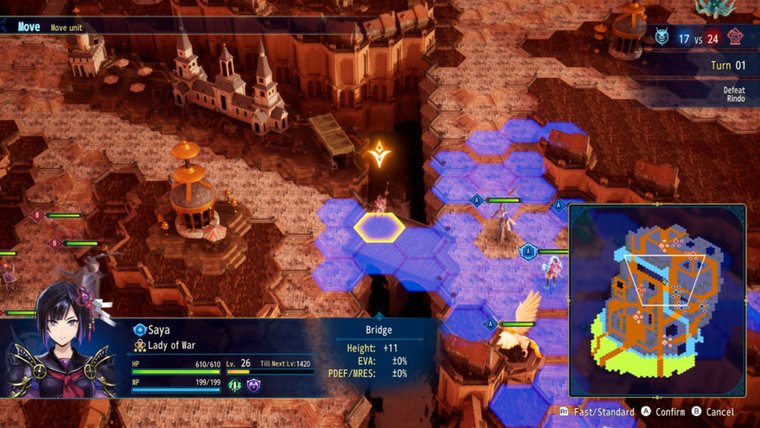
That matters because the old setup had only a tiny amount of shared event battle drama. Here, the preview suggested each nation’s path can feel meaningfully different, not just “same war, different banner, slightly different hat.” For replay-hungry strategy JRPG fans, that is catnip with a tiny sword.
The 30-season campaign limit is also fixed this time. Rather than letting players turn the restriction off, Abyss builds around it. The goal is not necessarily to paint the entire continent of Meltitea in your colors; it is to grow strong enough to survive the mandatory Event Battles and push your faction’s story forward. That tighter clock should make each decision sting a bit more, ideally in the good “I am a genius or a fool, no middle ground” way.

Replay Value Gets a Big, Pointy Upgrade
If you are here for pure strategy rather than story, Brigandine: Abyss is also bringing a Mission Mode with 24 factions. The developers did not fully unwrap that particular present, but they did say win conditions vary. Translation: probably less cutscene sipping, more battlefield sweating.
The Organization Phase still handles the essentials: squad setup, monster management, item purchasing, equipment, unit leveling, knight movement, and the very important art of pretending your front line is under control. New base upgrades add another layer, letting players invest resources for local bonuses such as extra materials, monster-type stat boosts, and direct equipment buying.
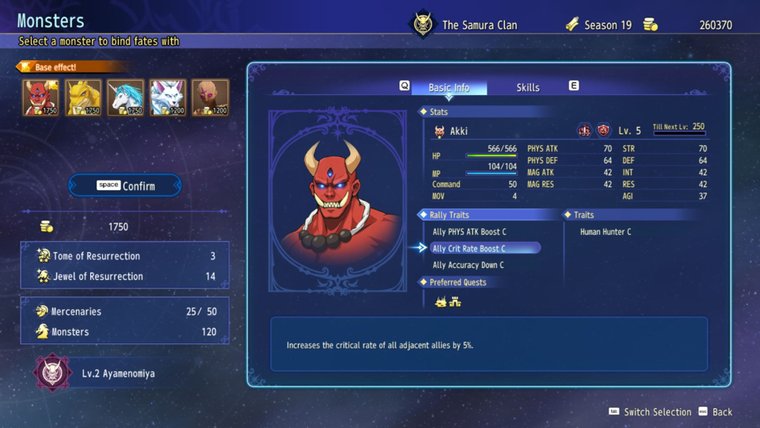
Quests are also getting a welcome fix. In Runersia, sending knights away could feel like lending your best umbrella to a thunderstorm: brave, questionable, and likely to leave you exposed. Abyss introduces mercenaries who can take on quest duties, freeing your unique leaders to stay home and keep the enemy from rearranging your furniture with axes.
The preview’s Event Battle also showed off mid-battle dialogue in a visual novel style, complete with character illustrations and Japanese voice acting. The showcased objective was not just “delete the whole army,” either. Players had to eliminate a specific enemy leader, which immediately makes the tactical puzzle more interesting than the classic approach of bonking every hostile unit until the victory screen appears.
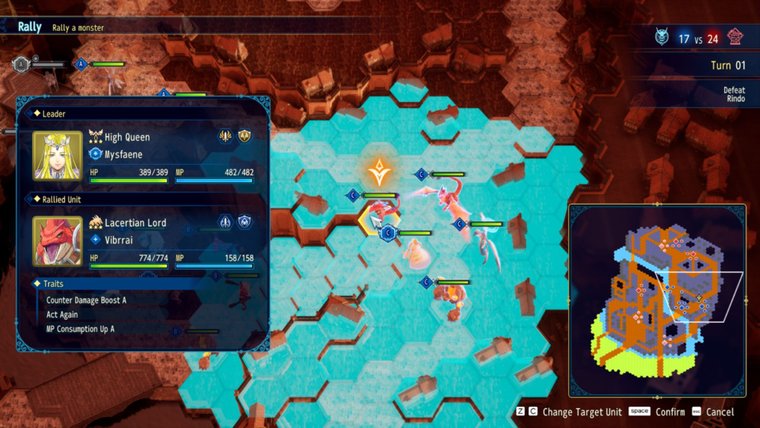
Rally Could Be Brigandine: Abyss’s Sneakiest Great Idea
Core combat still looks recognizably Brigandine: units move across a hex grid, use skills, launch attacks, and try not to become a cautionary tale. Terrain height is now a factor, giving the map more strategic texture, but the flashiest new tool is Rally.
Rally temporarily removes a monster from the battlefield to power up the squad leader with a major stat boost and, in some cases, an extra effect. On paper, that sounds like a trade-off. In practice, it may solve one of the series’ funniest battlefield problems: too many units clogging the map like it is a fantasy rush-hour commute. If a melee monster cannot reach anything anyway, turning it into a temporary buff machine is a neat little bit of tactical recycling.
The cast also appears more visually distinct. In Runersia, the faction leaders tended to receive the star treatment while many supporting faces looked more uniform. In Abyss, main characters within a faction have unique appearances, custom skins, and specializations, which should make every campaign feel less like a spreadsheet with capes.
What the Developers Clarified
During the Q&A, the developers explained that Event Battles are the major gameplay differentiator between campaigns. Because the season limit restricts how much of the region players can explore in a single run, starting near different areas should also change the squads, monsters, and tactical situations players encounter.
They also confirmed that Brigandine: Abyss does not include a major branching campaign choice like The Legend of Runersia. Instead, each of the six main story campaigns tells a self-contained story from start to finish. Final bosses can differ by campaign, though some routes may share one, because even final bosses apparently believe in carpooling.
Custom difficulty will not be available at launch. The game will stick to easy, normal, and hard settings. The six story campaigns will show different perspectives on the conflict, but they will not intertwine into one giant narrative knot. Somewhere, a lore corkboard just sighed in relief.
Brigandine: Abyss quick details
- Release date: August 26, 2026
- Genre: Strategy JRPG / tactical RPG
- Story structure: Six self-contained faction campaigns
- New highlights: Event Battles, fixed 30-season campaigns, Rally, base upgrades, mercenary quests
- Voice acting: Japanese voice acting shown in the preview
Early Verdict: A Confident Strategy JRPG Sequel
Based on the preview, Brigandine: Abyss looks like a smart evolution rather than a safe sequel. It keeps the grand strategy RPG bones intact, but the Event Battles, stricter campaign clock, faction-specific stories, mercenary questing, base upgrades, and Rally mechanic all point toward a game that knows exactly where the old formula needed a friendly shove.
For longtime Brigandine fans, this is the kind of preview that dangerously activates the “one more campaign” part of the brain. For newcomers, Abyss may be the cleanest excuse yet to learn why a bunch of knights, monsters, and hexes can consume a weekend with terrifying efficiency. Clear your calendar. The dragons probably already have.
Comments
Join the conversation
Share a thoughtful response, question, or note for the community.
Log in to write a message
Please log in to your profile before writing and posting a comment.
Comments
Loading comments…
No comments yet. Be the first to start the conversation.